
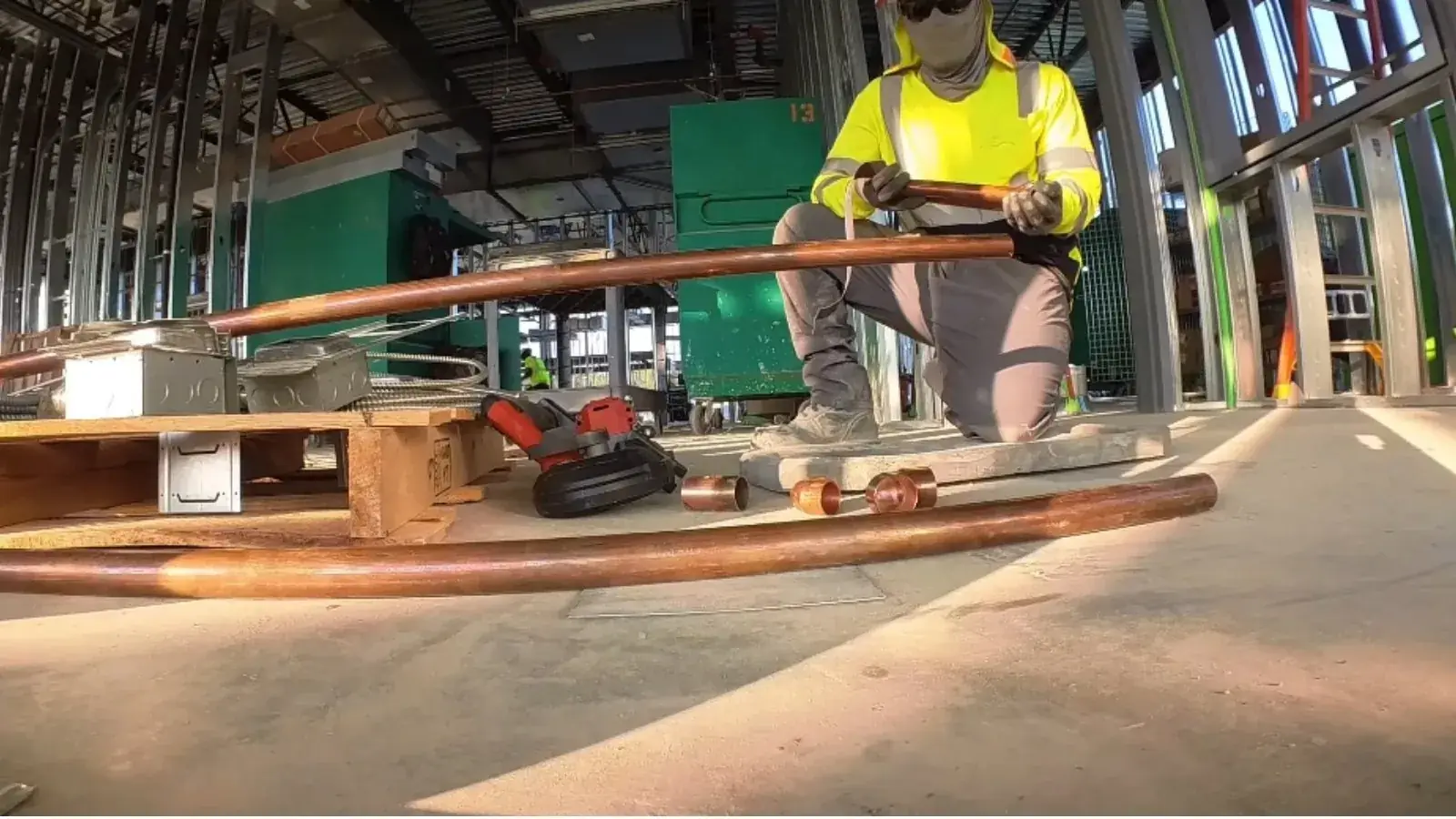
Plumbing installation means putting in new supply lines, drains, vents and fixtures, or moving existing ones. In Sapulpa, OK that covers a new toilet or vanity, a basement bath, a kitchen island sink and the rough-in behind the walls of a remodel. Licensed plumbers do the work, and a dispatcher books a visit so someone can look at the space, the existing pipe and the plan before anything is priced.
Answered first
Quick answers before the details
Plumbing permits in Sapulpa are separate from building permits and go through Building Inspections. They must be requested by contractors licensed by the State and registered with the City. Call City of Sapulpa Building Inspections to confirm what your project needs.
It depends on access, layout and how many fixtures are involved. A bathroom over a crawlspace usually goes faster than one on a slab. The plumber can give a realistic schedule after seeing the space.
Often yes, but it is the most involved relocation because the drain is large and needs slope and a vent. The plumber will check the floor structure and the path to the main drain before agreeing to a plan.
Jobs that count as installation
Installation is different from repair. You are adding or relocating something, so the plumber works from a plan instead of chasing a failure. Typical jobs include:
- Replacing a toilet, sink, tub or shower valve with a new model.
- Adding a bathroom, half bath or laundry hookup to a house.
- Moving a kitchen sink or washer box to a new wall.
- Running new water lines to an addition, garage or outbuilding.
- Roughing in pipes for a new house or a gutted room.
For a failing fixture rather than a new one, faucet repair or a toilet repair may be all you need.
What the rough-in stage actually is
Rough-in is the plumbing that goes in before drywall: supply lines, drain pipes, vent stacks and the shutoff valves that serve each fixture. Everything after is trim, meaning the visible faucet, toilet and drain covers. Rough-in is where mistakes become expensive, because a drain set two inches off center means opening a finished wall.
Before pipe is cut, the plumber marks fixture centers, checks that each drain has a vent, and confirms the slope on horizontal drain runs. Most horizontal drains need a steady downward pitch, and the plumber measures it instead of eyeballing. Ask to walk the framing together once the pipe is in but before it is covered.
Ready to plan your plumbing project?
A dispatcher is on the line 24/7. Nobody here will pressure you into a repair, and the price is agreed before work starts.
Moving a drain or water line
Water supply lines are small and flexible, so moving them is usually the easier half. Drains are harder. A drain has to slope downhill, connect to a vent, and reach the main line, and a toilet needs a 3 inch or larger drain while a lavatory needs far less. Moving a toilet across a room can mean cutting a slab or notching a joist, and that is a structural question.
If the floor above a crawlspace or basement is accessible, relocation is simpler. On a concrete slab, the plumber may need to break out and patch the floor. Tell the dispatcher which kind of foundation you have.
PEX, copper and PVC: what goes where
PEX is flexible plastic tubing used for supply lines. It bends around corners, resists freezing splits better than rigid pipe, and uses fewer joints. Copper is rigid, durable and still common, particularly where heat or sunlight is an issue. PVC and ABS are the white and black plastics used for drains, and cast iron appears in older homes.
PEX is not for outdoor sun exposure or direct contact with a water heater flue, and the plumber will use the fitting method that matches the tubing. Ask what material is going into your walls and which fittings join it. Sapulpa's historic homes from the early 1900s oil and glass era may still carry old galvanized or cast iron, and connecting new pipe to old needs the right transition fittings.
Permits and who can pull them
Plumbing permits in Sapulpa are separate from building permits and are requested through Building Inspections, at the City Hall Annex on East Hobson Avenue. The city says plumbing permits must be requested by contractors currently licensed by the State and registered with the City. Minor repairs and adjustments are the main exception.
The penalty for skipping a permit is real. The city page says work done without permits can be fined at least double the permit and inspection fees. Unpermitted work can also complicate a home sale or an insurance claim. Ask the plumber to confirm in writing that the job will be permitted and inspected, and verify the license with the Oklahoma Construction Industries Board at oklahoma.gov/cib. For anything specific to your project, call City of Sapulpa Building Inspections.
What to plan before a remodel
Good plumbing starts with decisions made before the first visit. Gather these before you call.
- 1Pick fixtures first.Rough-in dimensions depend on the exact toilet, vanity, tub and shower valve. Buy or at least choose them before pipe goes in.
- 2Decide where everything lands.Mark centers on the floor plan. Even a shift of a few inches can change the drain path.
- 3Check access.Note whether the room sits over a basement, crawlspace or slab, and tell the plumber.
- 4Think about capacity.Several showers running together or a large soaker tub can strain the existing supply line and water heater.
- 5Line up the other trades.Framing, electrical and tile all depend on rough-in timing, so settle the order of work.
Choosing a path: a decision table
| Project | Usually needs | Good to know |
|---|---|---|
| Swap a toilet or faucet in the same spot | Supply stops, wax ring or seals | Often no new pipe |
| Move a sink within the same wall | Short supply and drain changes | Check the vent |
| Add a bathroom or half bath | New supply, drain, vent, permit | Slope and venting drive the layout |
| Move a toilet to another room | Larger drain, floor or slab work | Structural check needed |
| New construction | Full rough-in, inspections, trim | Inspections occur at each stage |
| Remodel to a bigger shower or tub | New valve, drain, possible water heater review | Check hot water capacity |
Working with the existing house
Older pipe often looks fine until a plumber touches it. Galvanized steel narrows inside from rust, cast iron can crack at joints, and a main shutoff valve that has sat for decades may not close. During a remodel, the plumber will test the main valve and look at the pipe your new work connects to.
If the existing system is nearing the end of its life, a conversation about repiping may belong in the same project. Open walls are the cheapest time to replace what is behind them. The plumber will say plainly what must be replaced and what can wait.
What decides the price of plumbing installation
A clear price is given before work starts. These factors drive the number, and the dispatcher can talk through them when you call.
One toilet swap is a short visit. A new bathroom involves supply, drain, vent, valves, fixtures and inspections, and each added fixture adds pipe and labor.
A new bath near the existing stack is simpler. Long runs, new vents through the roof and trenching all add time.
Crawlspace and basement access make pipe runs easier. A concrete slab can mean cutting, trenching and patching.
PEX, copper and PVC cost different amounts, and so do the fixtures themselves. Higher-end valves and tubs can change the rough-in.
Permit fees and the time to schedule inspections are part of a properly permitted job. Call for your real number.
Insurance and resale notes
Homeowner's policies generally cover sudden damage, not defects in new work, and they treat unpermitted work differently. Check your policy before a project. Keep permit paperwork and invoices, because buyers and inspectors sometimes ask for them when you sell.
Installation across Sapulpa, Kellyville, Mounds and Glenpool
Sapulpa Express Plumbing books installation visits across Sapulpa and nearby towns, including Glenpool and Mounds. Many newer homes outside downtown are slab-on-grade, which changes relocation plans, so mention your foundation when you call. A dispatcher can also line up an installation for a hot water upgrade through water heater installation.
Dewey Avenue is the downtown strip, and projects in older buildings near it are worth a conversation about existing pipe before any plan is final.
Sources and standards
New installations are built to the UPC or IPC as adopted locally, using pipe and fittings that carry the NSF or ASTM markings the code calls for, and are inspected under a City permit. Permit and edition questions belong to the city office, and license questions to the state board.
Plumbing installation questions
Neither is better in every case. PEX is flexible, quick to install and tolerant of freezing, while copper is rigid and handles heat well. The right choice depends on the job and what the existing pipe is.
Fixture models if you have chosen them, a sketch of the room, and a note about the foundation type. Photos of the existing pipe help too.
Yes. Tell the dispatcher who is handling framing and drywall so rough-in and inspection timing fits the schedule.