
Water escaping where you cannot see it is an emergency in slow motion. Our line runs 24/7, and while you wait you should shut off the main valve if water is spreading. Leak detection in Sapulpa, OK means finding the exact spot where a pipe is losing water, in a wall, a floor or a buried line, without opening up the whole house. This page goes symptom by symptom, then covers what a detection visit involves.
Answered first
Quick answers before the details
Watch the meter with everything off. If the dial moves or the reading rises over half an hour, water is going somewhere. A warm floor spot, a spreading stain, the sound of water in a quiet house and a bill that climbs for no reason are other signs.
Yes. The line at (855) 575-2890 is open 24/7. A dispatcher asks where the water is, what you have shut off and whether electricity is involved, then lines up a licensed plumber, with same-day appointments when available. Close the main valve and stay clear of wet outlets in the meantime.
The city says Utility Billing provides leak adjustments. Call Utility Billing at City Hall to ask what applies to your account. We cannot say what will be approved, but a written plumber's report is useful to have ready.
When a hidden leak is an emergency
Water coming through a ceiling, a soft or bulging wall, a meter spinning fast with every tap closed, or any water near outlets and the panel all call for the main shutoff first and a phone call second. Slow leaks also turn into big ones overnight, which is why the dispatcher answers on weekends and after hours too.
The meter keeps moving with everything off
This is the cleanest sign of a leak between the meter and your fixtures. Water passes through the meter while nobody uses any, so something is taking it. A simple test at home:
- Close every faucet and stop the dishwasher, washing machine and ice maker.
- Open the meter lid. Many meters have a small triangle or star dial that turns when any water moves, even a trickle.
- No dial? Write down the reading, wait at least 30 minutes without using water, then read it again.
- If the dial turned or the numbers changed, water is leaking somewhere, or a toilet is slipping water into the bowl.
- Close the main shutoff inside the house and look again. A dial that stops means the leak is inside. A dial that keeps turning points to the buried line between meter and house.
A toilet flapper that leaks silently is the most common false alarm, so put a few drops of food coloring in each tank and see whether color reaches the bowl. Our toilet repair page covers that fix.
Think you have a hidden leak?
A dispatcher is on the line 24/7. Nobody here will pressure you into a repair, and the price is agreed before work starts.
An unexplained high water bill
A bill that jumps with no change in habits is the other common way people discover a leak. The city reads meters in 1,000-gallon units, so a slow drip can hide for weeks and then show up as one large step on a statement.
Compare several months, not only the latest bill. A steady climb suggests a worsening leak, while a single spike may be a hose left on or a stuck irrigation zone.
The city of Sapulpa says its Utility Billing office provides leak adjustments, so call Utility Billing at City Hall to ask what applies to your account. We cannot say what the city will approve. A plumber's written report of what was found and fixed is a sensible thing to have in hand when you call.
Wet ceiling or wall, and what to check in the attic
A brown ring on a ceiling, paint that bubbles, a wall that feels cool and soft or a musty closet all suggest water inside the cavity. The stain shows where water arrived, not always where it started, because water runs along pipes, joists and top plates before it drips.
Likely sources are an upstairs supply line, a shower valve, a drain connection, or a roof or window leak that only looks like plumbing. A plumber sorts these out by running fixtures one at a time while watching a moisture reading.
In the attic, look for wet insulation, dark rafters and drips under a water heater pan. Do not step between joists in the dark. If a ceiling is bulging with water, set a bucket below and relieve it with a small hole while standing out of the drip path.
A warm spot on the floor
A patch of tile, wood or concrete that feels warm underfoot can mean a hot water line is leaking beneath it. You may also hear a faint hiss in a quiet house, see damp baseboards, or notice the water heater cycling more than usual.
A warm spot is not proof, since sun through a window, ducts or in-floor heat can do the same. A thermal camera and a pressure check settle the question. Homes on slab foundations bury their pipes in or under the concrete, which changes the repair options, and our slab leak repair page covers that case.
A leak under the house or in the crawlspace
Crawlspaces give a plumber easy access, yet water down there goes unnoticed because nobody looks. Warning signs are a sour smell, cupped or bouncy floors, mold on the underside of the subfloor and insulation that has dropped.
The plumber enters with a light and a moisture meter and traces supply and drain lines, checking joints and hangers. Drain leaks stain the area below a tub, kitchen sink or toilet. Supply leaks drip or spray.
Standing water can also come from rain or grading, so a good visit rules out the outdoors first.
A wet spot in the yard or along the buried line
Grass that stays soggy in a dry week, mud with no rain, a low spot that keeps growing or pressure that sags at every faucet all point to a break on the line from meter to house. Such a break can lose a lot of water without ever showing inside.
Never dig on a hunch. Call 811 before any digging so buried utilities get marked. Options after the find are a spot repair, a replaced run or a new line, compared on our water line repair page.
The city's Utility Maintenance Department maintains city water and sewer lines, so ask the plumber where your leak sits relative to the meter. A leak before it is a different phone call than one after it.
Irrigation line leaks
Sprinkler systems leak at risers, valves, heads and the lines between them. Signs are a zone that floods, heads that stay down, a wet strip across the lawn or a bill that climbs in warm months.
To test, shut off one zone at a time at the controller and watch the meter. If the meter slows when a zone is off, that zone holds the leak. A valve that never fully closes is a frequent culprit, as is a backflow device that weeps. Tulsa-area January lows average about 28 F, so exposed valves can crack in a hard freeze. Drain or insulate them before winter.
Water heater leak or plumbing leak
A puddle by a water heater does not always mean the tank failed. Dry the area, then hold a dry paper towel against the inlet and outlet connections, the relief valve and the drain valve to see which one gets wet.
A drip from a threaded fitting on top is often fixable. Water from the tank body or bottom seam usually means the tank has failed and needs replacing. See water heater repair for those decisions. Before touching anything, shut off the cold supply to the tank, and turn off power to an electric unit at the breaker or set a gas unit's control to off.
Pool and spa leaks
A pool losing more than evaporation explains may leak at the shell, skimmer or return lines. We focus on the supply lines and auto-fill plumbing that tie into the house, and a pool contractor handles liners and shells.
Commercial leak detection
Shops, restaurants and rental buildings lose water the same ways homes do, with the added puzzle of many tenants. A property manager may call about a ceiling stain in one unit with the source in another, so meter isolation and zone-by-zone shutoffs matter. See our commercial plumbing page for business buildings.
How a typical detection visit works
A visit starts with questions: where is the water, when did it begin, what changed on the bill. Then the plumber moves from the least invasive test to the most specialized. Every method has limits, and a good plumber tells you what they are.
- Pressure testing. A section of pipe is isolated and held at pressure while a gauge is watched. A drop confirms a leak in that section but does not show the spot.
- Acoustic listening. Sensitive microphones pick up the sound of water escaping under pressure. Traffic noise, plastic pipe and deep lines mute the sound, so the result is a strong lead and not a certainty.
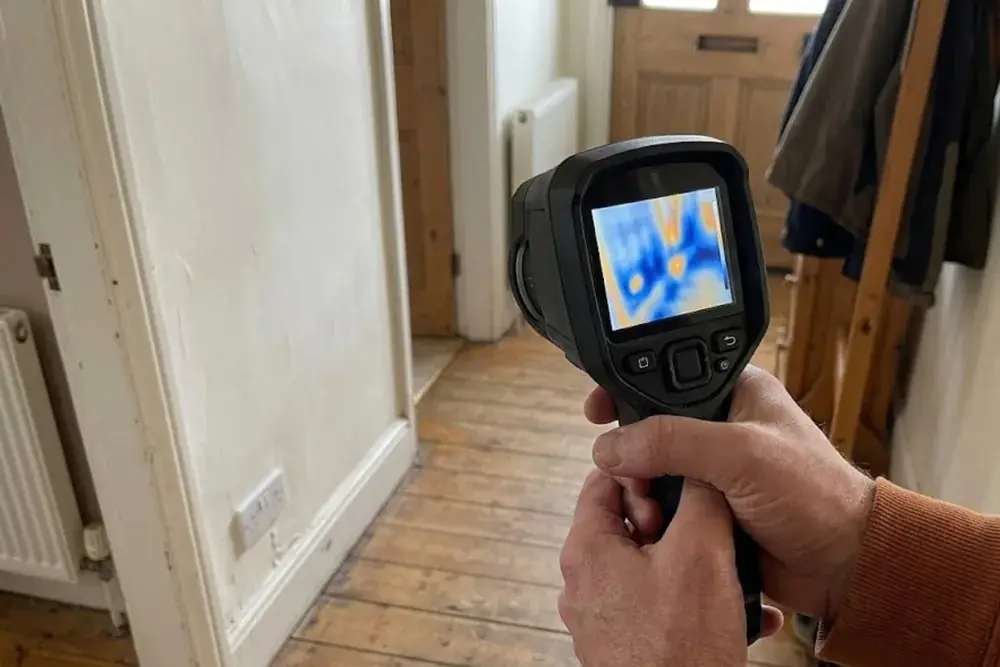
- Thermal imaging. A camera shows temperature differences, which makes hot water leaks under floors and wet insulation visible. It cannot see through concrete, and cold leaks are harder to read.
- Tracer gas. A line is filled with a harmless hydrogen and nitrogen mix, and a detector sniffs along the surface. It suits stubborn cases but is slower and needs specialized gear.
- Camera inspection. A small camera on a flexible cable looks inside drains for cracks, offsets and roots. It cannot find a pressurized supply leak.
- Moisture meter. Pin or pinless probes read dampness in drywall and wood. They show how far the water spread, not where it started.
Choosing the next step
| Situation | Likely first test | What it tells you | Limit |
|---|---|---|---|
| Meter moves, nothing wet | Meter isolation, pressure test | Inside or outside the house | Does not give the spot |
| Warm floor | Thermal camera, listening | Hot line leak location | Cold leaks are faint |
| Wet wall or ceiling | Moisture meter, thermal | Extent and source path | Source may be above |
| Soggy yard | Listening, line locate | Where a buried line broke | Deep or plastic pipe is quiet |
| Drain smell or sag | Camera | Cracks, offsets, roots | No pressure test |
After the find, the plumber explains the repair choices and gives a clear price before work starts. A leak in the sewer side leads to sewer line repair instead.
What to do while you wait
- Shut off the main water valve if water is spreading, then open a faucet to release pressure.
- Move rugs, furniture and electronics out of the wet area.
- Kill power to a wet room only if you can reach the breaker without standing in water. Otherwise call 911.
- Photograph the damage and the meter reading before you clean up.
- Set out buckets and towels, and keep a shop vacuum away from standing water.
- Smell gas or hear hissing from a gas line? Leave, call 911, then your gas utility, such as Oklahoma Natural Gas at 800-458-4251.
What decides the price of leak detection
Detection is priced by effort and equipment. Call for your real number and expect a clear price before work starts.
A leak behind an open crawlspace hatch is quicker than one under a finished floor or patio. The more that must be moved or opened, the longer the visit.
A leak that a pressure test and a listening pass locate is a short visit. If tracer gas or a camera is also needed, time and equipment grow.
Walls, slabs and buried lines call for different tools. Buried lines may need locating before anyone digs.
Finding a leak and fixing it are separate jobs. A small fitting and a long run of pipe are very different repairs.
After-hours calls may price differently from a weekday appointment. Ask what the visit includes.
Insurance and leak damage
Homeowner's policies often treat a sudden, accidental water event differently from long-term seepage. Some cover resulting damage but not the cost of locating or repairing the pipe itself. Terms vary, so check your policy and call your agent before repairs begin. Photos and a written plumber's report help.
Leak detection around Sapulpa
Sapulpa is a historic Creek County town with homes from the early oil and glass era beside newer ones, so pipe materials differ from house to house. The plumber we send checks what your home actually has. We also dispatch to Kellyville and the other nearby towns.
If a repair needs a permit, plumbing permits in Sapulpa are separate from building permits and go through Building Inspections at the City Hall Annex, requested by state-licensed, city-registered contractors. Verify any plumber's license with the Oklahoma Construction Industries Board.
Sources and standards
Leak location uses meters, listening gear and pressure testing as their makers specify, and the EPA's WaterSense program publishes a household leak check that matches the meter test described above. Permit and edition questions belong to the city office, and license questions to the state board.
Leak detection questions
Not always. Detection aims to pinpoint the spot, so any opening is small and targeted. The plumber explains the options and gives a clear price before work starts.
No. A dispatcher can tell you what to shut off and what to photograph, but the plumber has to see and test the system to find the source.