
A clogged drain in Sapulpa, OK rarely waits for a convenient hour. If water is standing in a sink or creeping up a tub, stop running water and call. The 24/7 line is open at night and on weekends. While you wait, keep the faucets closed, skip the flush, and set aside the chemical cleaner.
Drain cleaning means removing whatever blocks the pipe, usually with a cable machine (a snake), a hand auger or a water jet, so wastewater can flow out of the house again.
Answered first
Quick answers before the details
No. Chemical cleaners sit in a blocked pipe and can burn skin and eyes. They also leave caustic water the plumber must work through. A plunger or a hand auger is a safer first step for a single fixture.
If more than one fixture is stopped or gurgling, or the lowest drain in the house backs up when you run water elsewhere, the main is the likely culprit. A single fixture is usually a local trap or branch.
Yes. The 24/7 line is answered by a dispatcher who asks which fixtures are affected, books a licensed plumber, and tells you what to shut off while you wait. The diagnosis happens on site, and the price is stated before work starts.
Slow, clogged, or backing up: what you are really looking at
Callers use these three words for different problems, and the difference tells a plumber where to start. A slow drain still empties, just with a gurgle or a lazy swirl. A clogged drain holds water in one fixture and does not move it at all. A backing-up drain pushes water or sewage out of a different opening than the one you used.
The pattern matters more than the word. One slow bathroom sink is almost always hair and soap scum in its own trap. Two or three fixtures acting up together point past the trap, to the branch line or the main.
| What you see | Most likely location | Typical first step |
|---|---|---|
| One sink drains slowly | P-trap or short branch | Hand auger or small cable |
| One fixture fully stopped | Trap or branch line | Cable machine at the fixture or a cleanout |
| Toilet and tub both gurgle | Shared branch or main | Cable at the main cleanout, then camera |
| Tub or floor drain fills when the washer runs | Main sewer line | Larger cable, and often a camera look |
| Sewage rising in the lowest drain | Main line fully blocked | Treat as urgent, stop all water use |
When a backed-up drain is an emergency
Some clogs can wait until morning. Others cannot. Call right away if wastewater is rising in a tub, shower or floor drain, if more than one fixture is stopped, if sewage smell is filling a room, or if the water is coming up near carpet, drywall or a furnace. That is the line between a nuisance and a cleanup.
A single stopped kitchen sink with no water spreading is usually a same-day appointment when one is available. A dispatcher will ask where the water is showing up and which fixtures are affected, then book accordingly. The plumber we send does the actual diagnosis on site, because no one can tell a hair clog from a main-line blockage over the phone.
Water not going down?
A dispatcher is on the line 24/7. Nobody here will pressure you into a repair, and the price is agreed before work starts.
What to do while you wait
- Stop running water everywhere, including the dishwasher and washing machine.
- Do not flush toilets if any drain is backing up.
- Skip chemical drain openers. They sit in the pipe, burn skin, and make the plumber's job riskier.
- Pull rugs and cardboard away from any wet floor and put towels at the edge of the spill.
- Find the main cleanout if you can (a capped pipe, often outside near the foundation or in a basement or garage) and clear the space around it.
- If sewage has reached the floor, keep kids and pets out of the room and wear rubber gloves for anything you touch.
- Take photos of any water damage before you clean up.
Kitchen sink clogs
Kitchen sinks clog differently from bathroom sinks because grease is the main problem. Cooking oil goes down warm and liquid, then cools on the pipe wall and builds a waxy layer that catches rice, coffee grounds, pasta and eggshell bits. Over months the pipe narrows until a bowl of dishwater drains like a straw.
A double basin with a disposal adds a second trouble spot, the disposal outlet and its short tailpiece. If both sides of the sink are full, the blockage is past the joining tee. If only the disposal side holds water, the problem may be the disposal itself, and garbage disposal repair is the better fit.
A dishwasher that leaves dirty water in the bottom is another sign of a downstream clog, since its hose ties into the disposal or tailpiece. A plumber typically cleans the trap, runs a small cable through the wall stub-out, and checks the dishwasher high loop.
How a plumber finds and clears the blockage
A visit usually starts with questions, then a look. The plumber checks which fixtures are affected, runs water to watch the pattern, and opens the nearest cleanout or pulls a trap. From there the tool depends on the pipe.
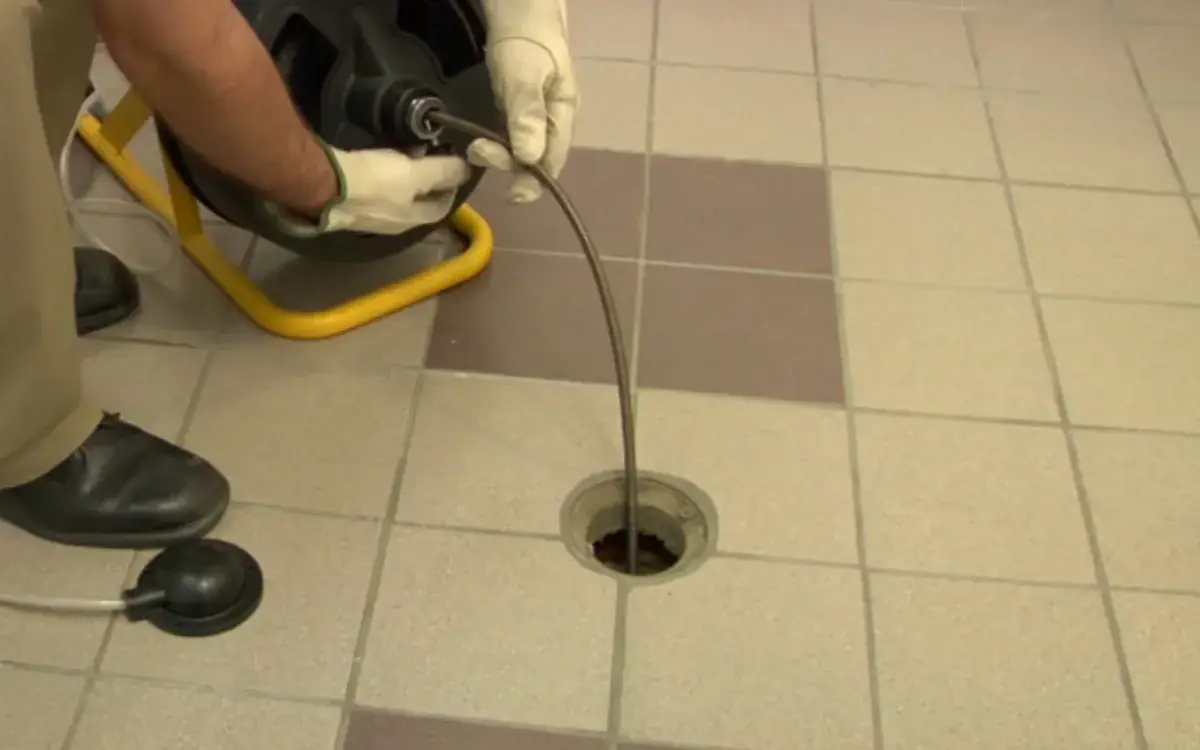
A drum-style cable machine with a cutting head handles most household clogs. Small cables (about 1/4 to 3/8 inch) fit sink lines. Larger cables (1/2 inch and up) are used on 3 and 4 inch drain lines and the main. A toilet auger works on a closet bend without scratching the porcelain.
When the cable keeps hitting the same point, or the clog returns, a sewer camera shows what is actually there. A water-jetting head can follow for grease and heavy buildup, as explained on the hydro-jetting page. We do not promise a result by phone, and the visit price is stated before work starts.
Why a snake sometimes stops short
A snake that stalls partway is information, not just a nuisance. The cable is stopped by something, and the plumber has to work out what.
- A root mass. Fine roots wrap the cable and hold it. A cutting head can open a channel, but the roots grow back.
- A bend or fitting. A tight 90 degree turn or a mismatched coupling can catch the cable end.
- A belly (sag) in the line. The cable coils in the low spot and cannot push forward, and water settles there.
- A broken or offset pipe. The head drops into a gap or hits the edge of a shifted joint.
- A solid obstruction. Toys, wipes, a wad of paper towel or a collapsed pipe section.
If the cable will not pass, the right next move is a camera, not more force. Pushing harder can damage old pipe. See sewer inspection for what a camera reveals.
Drain line leaks
A drain can leak as well as clog. A slow drip at a trap joint, a damp cabinet floor under the sink, or a stain on the ceiling below a bathroom often means a loose slip nut or a cracked fitting, not a supply problem. Drain leaks only show up when water is running down the line, so they appear and disappear.
A plumber checks by filling the fixture, letting it drain, and watching the joints and the pipe below. Hidden leaks inside a wall or under a slab call for leak detection instead.
When a clog means the main line
If the house has one problem, look at the fixture. If it has several, look at the main. The signs of a main-line blockage are gurgling in the lowest drains, a toilet that bubbles when the washer drains, and water rising in a shower or tub on the lowest floor. All fixtures share that last stretch of pipe before it leaves the house.
In Sapulpa, the City Utility Maintenance Department maintains the city water and sewer lines. If your neighbors on the street also have backups, tell the dispatcher, because that points to the city side and not your own pipe. A plumber can confirm from the cleanout whether the blockage is on your side. For full main-line work, read about sewer line cleaning.
Repair options and honest trade-offs
| Method | Best for | Limits |
|---|---|---|
| Hand auger | Trap and short fixture clogs | Reaches only a few feet |
| Cable machine | Most household clogs and some roots | Opens a hole, does not scrub the pipe wall |
| Water jetting | Grease, scale, repeat clogs | Not for cracked or collapsed pipe |
| Pipe repair | Broken, bellied, or root-invaded pipe | Costs more than cleaning, fixes the real cause |
Cleaning restores flow. It does not repair a damaged pipe. If the same drain clogs again within weeks, the line likely has a defect worth finding.
What decides the price of drain cleaning
A clear price is given before work starts. The final number depends on the job, so call for your real number.
A fixture trap is a quick job. A 4 inch main line behind the house needs bigger equipment and more time. The farther the clog from the access point, the more work.
A cleanout makes the job simple. Without one, the plumber may pull a toilet or work through a roof vent, which adds labor.
Hair and soap scum come out easily. Grease, roots and compacted paper take heavier cutting heads, and sometimes more than one pass.
Looking inside the line adds time but tells you whether cleaning is enough or the pipe needs repair.
Night and weekend calls cost more to staff than a daytime appointment. Ask the dispatcher how the visit is priced when you call.
Insurance note
Homeowner's policies often cover sudden water damage from a pipe failure but treat sewer backup as an optional add-on, and many policies exclude damage from slow neglect. Cleaning the drain itself is normally a maintenance cost the owner pays. Check your policy, call your insurer before cleanup if damage is large, and keep your photos and the plumber's invoice.
Drain cleaning across Sapulpa
Sapulpa is a historic town with homes from the early 1900s oil and glass era alongside newer builds, so one street can hold several pipe materials. The plumber we send identifies what is in your line before choosing a tool. The same 24/7 line covers Kellyville and the surrounding area, and the plumbing services page lists everything else we dispatch for. Call (855) 575-2890 any hour.
Sources and standards
Drain machines are used to their makers' operating instructions, and trap, vent and cleanout requirements come from the UPC or IPC as your city has adopted it. Permit and edition questions belong to the city office, and license questions to the state board.
Drain cleaning questions
A returning clog usually means something in the pipe is catching debris, such as a grease layer, roots, a belly or a damaged joint. A camera look is the way to find out, and sometimes jetting is the better cleaning method.
The City of Sapulpa Utility Maintenance Department maintains city water and sewer lines. If neighbors also have backups, tell the dispatcher so the plumber can check the cleanout and confirm which side the blockage is on.