
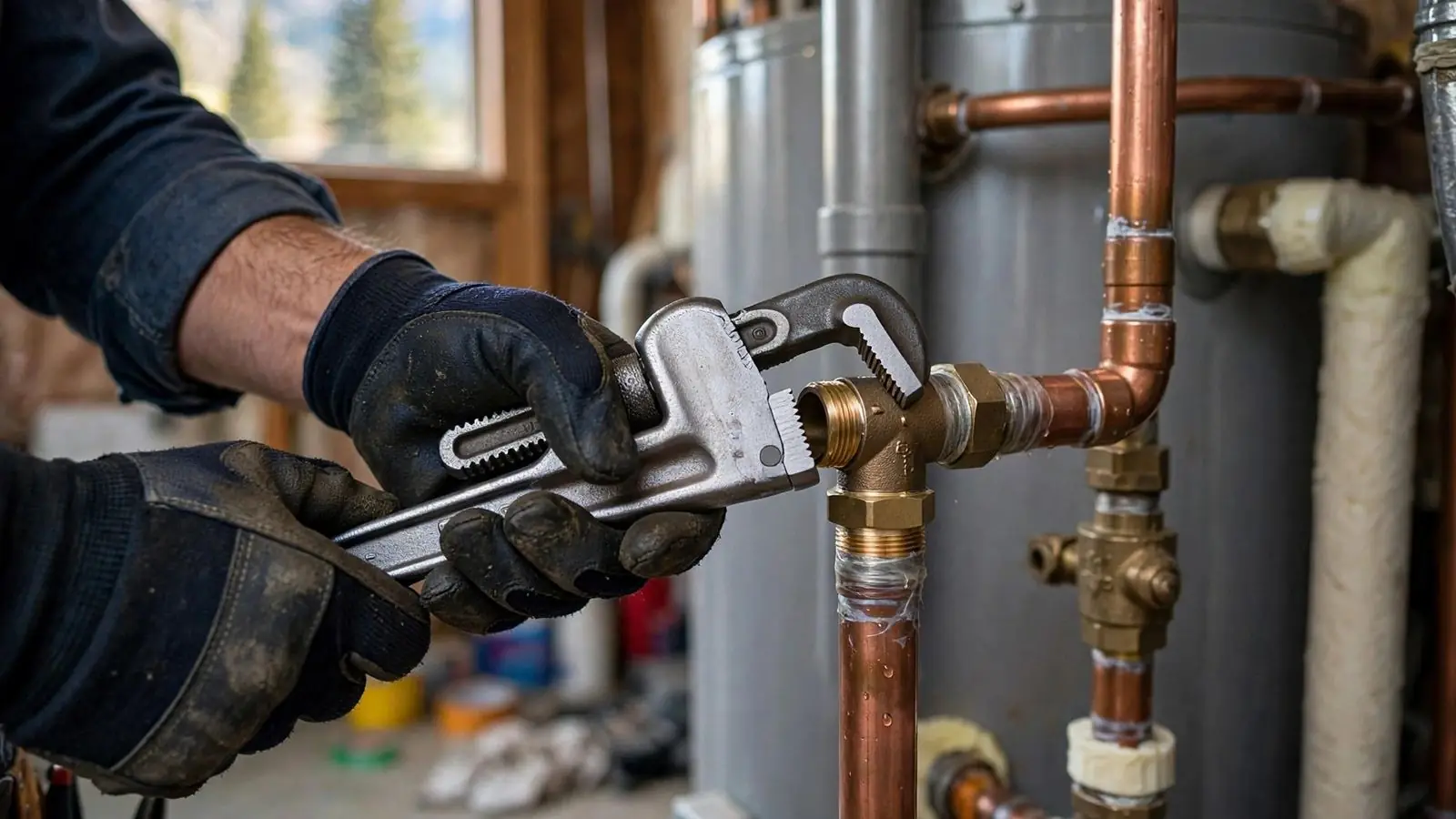
A water heater that quits on a cold morning is urgent, and a tank that leaks is worse. The 24/7 line is staffed, and while you wait you can shut off the cold supply valve above the tank and cut power or gas to it. Water heater repair in Sapulpa, OK means finding the failed part (thermostat, element, thermocouple, valve) and fixing it only when that makes sense. A tank leaking from its shell cannot be patched.
Answered first
Quick answers before the details
Yes. A dispatcher answers the 24/7 line, asks what type of heater you have and whether it is leaking or just not heating, and sends a licensed plumber as soon as a slot is open. You get a clear price before work starts. Meanwhile, shut off the cold supply and the power or gas.
A loose drain valve, a weeping relief valve or condensation are all fixable. Water seeping from the tank shell means the inner steel has rusted through and the tank needs replacing.
A pilot that lights while you hold the knob but dies when you release it points to the thermocouple. A pilot that will not light at all may mean no gas flow, a clogged pilot tube, or a bad control valve. Stop if you smell gas.
When a water heater problem is an emergency
Some faults can wait for the next appointment. Others cannot. Water running out of the tank body, steam or hot water blasting from the discharge pipe, a gas smell, or a scorched smell near an electric heater all call for action now. A ruptured tank can put dozens of gallons on a floor in the time it takes to find your phone.
Same-day appointments are offered when a slot is open, and the line is answered after hours and on weekends. Shut-off steps are in the callout below. A lukewarm shower with no water on the floor is usually urgent for comfort, not for safety, so the dispatcher will ask a few questions to sort one from the other.
What to do while you wait
- Turn off the cold water supply valve on the pipe running into the top of the tank. A quarter-turn lever or a round handle, turned clockwise, stops the flow in.
- Electric heater: switch off its double-pole breaker in the panel. Never drain an electric tank with the power on, because a dry element burns out in seconds.
- Gas heater: turn the gas control knob to OFF or PILOT. If you smell gas, skip every other step and read the gas-safety block further down.
- Move anything valuable off the floor around the tank and put a bucket or towels under a slow drip.
- Do not touch a hot discharge pipe or a hot tank, and keep children and pets back. Water above about 120 degrees F can scald quickly.
- Take a photo of the data plate (brand, model, serial, capacity) and of the leak, which helps with parts and with any insurance claim.
Water heater down? Talk to a dispatcher.
A dispatcher is on the line 24/7. Nobody here will pressure you into a repair, and the price is agreed before work starts.
Symptoms people notice
Most calls start with one of a few complaints. Matching yours to the likely cause helps the plumber arrive with the right parts, even though nothing is confirmed until the heater is opened up.
No hot water at all
Electric: a tripped breaker, a tripped high-limit reset, or a failed thermostat or element. Gas: a dead pilot, a bad thermocouple, or no gas at the control valve.
Hot water runs out fast
A dead lower element, a broken dip tube, or sediment cutting tank volume. Showers start hot and turn cold in minutes.
Rumbling, popping or ticking
Scale on the tank floor traps steam bubbles that burst under the burner or element. The noise means heat transfer is poor.
Rusty or smelly water
Rust only in hot water often means a spent anode rod. A rotten-egg smell in hot water only points to bacteria feeding on the rod.
Water on the floor
A loose fitting, a weeping relief valve, condensation, or a failed tank. Water seeping from under the insulation is the one that ends in replacement.
How the fault is found
A diagnostic visit follows a sequence. The plumber confirms the fuel type and reads the data plate for age, since a manufacture date is built into the serial number. Then the test depends on the heater.
On an electric tank, the plumber cuts power, pulls the access panels, and checks each element and thermostat with a multimeter for continuity and resistance. On a gas tank, the checks are pilot flame color, thermocouple output in millivolts, the gas control valve, and flue draft.
For leaks, the plumber dries the area and traces water to a fitting, the T&P valve, the drain valve, or the tank. A pressure gauge on a hose bibb shows whether house pressure is too high.
Gas, electric and hybrid heat pump water heaters compared
The three types fail in different ways, so repair looks different too. Heat pump units, sold as hybrid water heaters, are newer and have parts that most plumbers rarely see on an old tank.
Gas tank heaters
Common repairs are a thermocouple or flame sensor, a pilot assembly, a gas control valve, a dirty burner, or a blocked flue. A backdrafting heater can push carbon monoxide into the home, so a working CO alarm nearby is a sensible safeguard.
Electric tank heaters
Two elements and two thermostats do the work. Elements fail from scale and dry firing, thermostats from age. These are usually quick repairs as long as the tank is sound.
Heat pump (hybrid) heaters
These pull heat from the surrounding air into the tank with a small compressor and refrigerant circuit, with electric elements as backup. Common service points are a clogged air filter, a blocked condensate drain, a failed fan, or a control board error. Error codes vary by brand, so the manufacturer's manual drives the repair.
Gas-safety block
- Rotten-egg odor, hissing, or a gas smell near the heater: get everyone out of the house right away.
- Do not flip light switches, use a lighter, or operate any electrical equipment on the way out.
- Once you are safely away from the house, call 911, then call Oklahoma Natural Gas at 800-458-4251, or your gas utility if it is a different company.
- Do not go back in until the utility or fire department says it is safe. A plumber cannot test for gas by phone, and we do not try.
- A pilot that keeps going out, soot on the heater, or a yellow burner flame also needs a plumber, but not a rush out the door unless you smell gas.
Repair or replace: a decision table
Age and condition drive the choice more than any single part. Many tank heaters in homes run roughly 8 to 12 years, though use and water quality move that around. The table is a starting point, and the plumber who inspects yours gives the real recommendation.
| Situation | Usually repair | Usually replace |
|---|---|---|
| Heater under about 8 years old, no leak | Yes | Rarely |
| Bad thermostat or element, tank dry inside | Yes | If tank is old |
| Failed thermocouple or pilot | Yes | Only if heater is near end of life |
| Water leaking from the tank shell | No | Yes |
| Rusty tank, rust at the drain valve | Sometimes | Often |
| Repeated repairs within a short time | No | Yes, compare totals |
| Heater is under-sized for the household | No | Yes |
If replacement looks likely, water heater replacement covers tank choices, sizing and permits in detail. A tankless water heater is another route when the old tank is leaving anyway.
Relief valves, anode rods and sediment
The temperature and pressure relief valve opens if the tank gets too hot or too pressurized. A valve that drips may be failing, or reacting to thermal expansion in a closed plumbing system, where an expansion tank may be the fix. Never cap or plug a discharge pipe.
The anode rod is a magnesium or aluminum rod that corrodes so the tank steel does not. Once it is used up, the tank itself starts to rust. Many manuals call for checking it every few years, and swapping a spent rod can extend a tank with no leak yet. Flushing sediment through the drain valve helps most before the buildup hardens.
Why heaters fail early in Sapulpa homes
Sapulpa's drinking water comes from the City of Sapulpa Water Treatment Plant, which draws on surface water from Sahoma Lake and Skiatook Lake, according to the city's 2025 Consumer Confidence Report. The report does not give a current hardness figure, so test your tap or ask the city's water utility how hard your water is. Hard water builds scale faster, and scale is what kills elements and loads up the tank floor.
Cold plays a part too. The Tulsa-area normal January low is 28 degrees F, and February 2021 dropped to about -13 to -14 degrees F. Heaters in garages and attics can have supply lines that freeze first, so insulate those pipes before a hard freeze.
What decides the price of water heater repair
A clear price comes before work starts. The dispatcher will not quote a figure for a fault no one has seen, so call for your real number.
A thermocouple or anode rod is a small part. A gas control valve, heat pump compressor or control board is a large one.
Electric element swaps are simpler than gas control work. A hybrid heat pump unit is more involved.
A heater in an open garage is quick to reach. One in a tight attic or crawlspace takes longer.
If the tank is old or corroded, the advice may shift from repair to replacement, and the price changes with it.
A missing drain pan, a worn discharge pipe or flue problems may turn up during the visit. Each is quoted separately.
What homeowner's insurance usually covers
Homeowner's policies often respond to sudden water damage, such as a tank that bursts and floods a room, but usually do not pay to replace a heater that simply wore out. Slow leaks and maintenance neglect are commonly excluded. Check your policy and call your insurer before cleanup beyond stopping the water. Photos, the data plate and the plumber's written findings are what most claims ask for.
Permits, licensing and nearby areas
Minor repairs and adjustments are the main exception to the permit rule in Sapulpa. When a repair becomes a replacement, plumbing permits are separate from building permits and are requested through City of Sapulpa Building Inspections by state-licensed, city-registered contractors. You can check any plumber's license with the Oklahoma Construction Industries Board (oklahoma.gov/cib).
Dispatch runs from 215 E Dewey Ave in Sapulpa, and we also cover Kellyville, Mounds and Glenpool. Call (855) 575-2890 any hour.
Sources and standards
Repairs follow the maker's service instructions and, for gas models, the safe-shutdown steps in NFPA 54, which is why a smell of gas is a call to the gas utility and 911 first. For which code edition the city enforces, the building inspections office is the source, and the state board is the source for licenses.
Water heater repair questions
A small part on a sound tank is usually worth fixing. Repeated repairs, rust or a shell leak point the other way. The plumber on site can walk through both options.
Yes. They have a compressor, evaporator coil, fan and air filter plus backup elements. Many faults come from blocked airflow or drains, and codes depend on the brand.
Many manuals print lighting instructions, and following them exactly is reasonable. If you smell gas, the flame will not stay lit, or soot shows up, stop and call. Never relight a heater after a flood.
Bacteria in the tank reacting with the anode rod can produce hydrogen sulfide. A plumber can flush the tank and check the rod. A smell in cold water too is a different issue, so ask your water utility.
Minor repairs and adjustments are the main exception. Replacements go through plumbing permits at City of Sapulpa Building Inspections, so ask them or ask the plumber if you are unsure.