
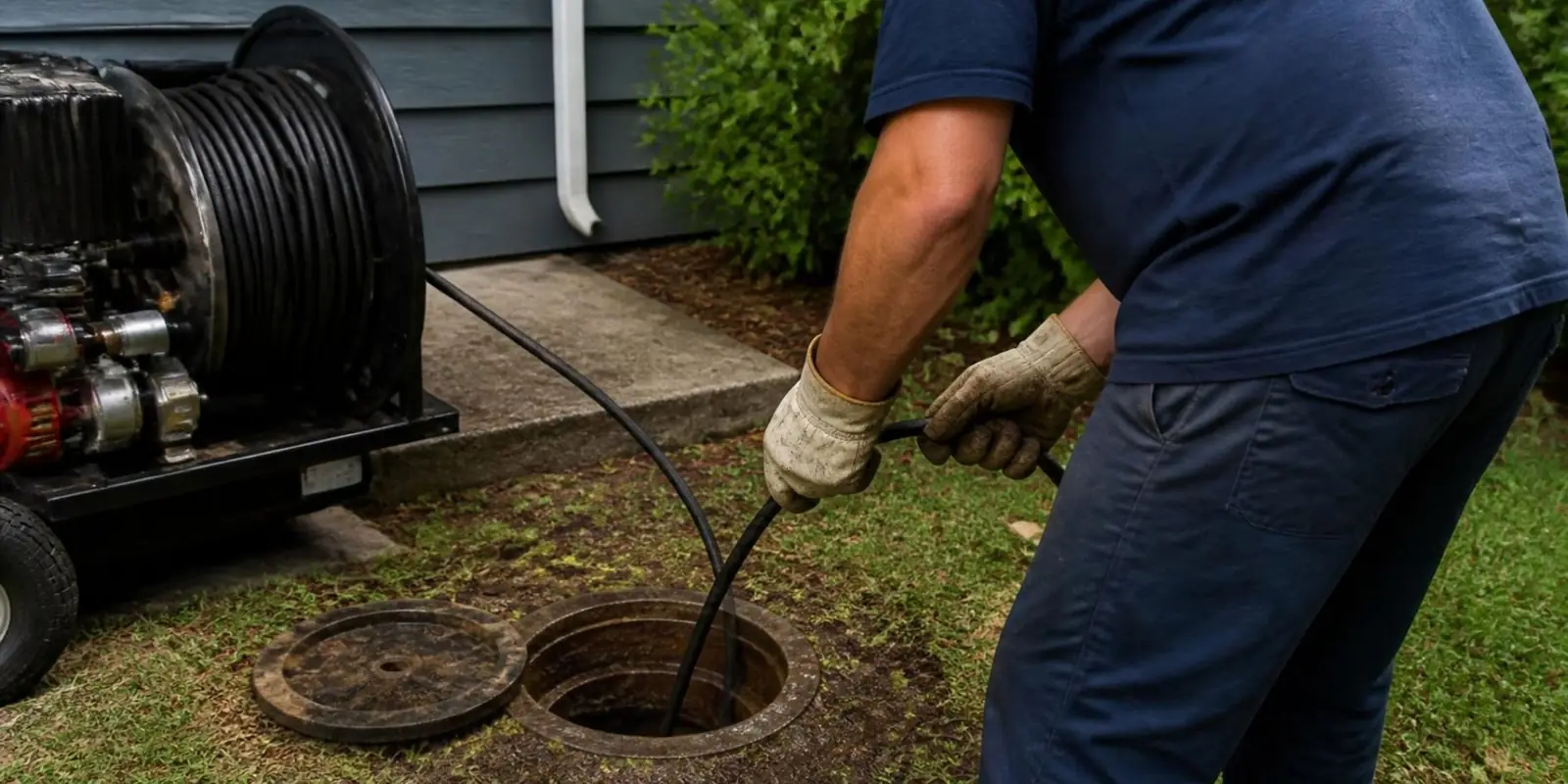
A sewer backup in Sapulpa, OK is an emergency, and the 24/7 line is open day and night. If wastewater is rising in a tub, shower or floor drain, stop using water now and keep everyone away from the wet area. Sewer line cleaning means clearing the main drain pipe that carries all of a home's wastewater out to the city sewer, using a large cable machine or a water jet, so everything can flow away from the house again.
Answered first
Quick answers before the details
Stop all water use, do not flush, keep people away from the wet area, and call the 24/7 line. Photograph the damage and clear space around the cleanout.
Yes. The 24/7 line is answered by a dispatcher who books a licensed plumber and tells you what to shut off. The plumber opens the cleanout, clears the line, and states the price before work starts.
If only your house is backing up, the blockage is likely in your pipe. If neighbors are too, the street main may be involved. The City of Sapulpa Utility Maintenance Department maintains the city lines, and the plumber can confirm from your cleanout.
First moves when the sewer backs up
- Stop every source of water: showers, sinks, washer, dishwasher, ice maker.
- Do not flush. One flush can add a gallon or more to a line that is already full.
- Keep people and pets out of the room, and wear rubber gloves and boots for anything you must touch.
- Ventilate if it is safe, and step outside if the smell is strong.
- Do not run a vacuum, fan or electrical device in standing sewage or wet carpet.
- Photograph the water level and damaged items before cleanup, for your insurer.
- Locate the main cleanout and clear space around it. Leave the cap closed unless the plumber asks.
Why it is urgent, and what a dispatcher will ask
Raw sewage carries bacteria and should not sit in a house. Beyond the health issue, it soaks into drywall, carpet pad and baseboards fast, so every hour counts for cleanup.
When you call, a dispatcher asks which fixtures are backing up, where the lowest drain in the house is, whether neighbors have the same problem, and whether this has happened before. A licensed plumber is sent same-day when available, at night and on weekends too. The plumber diagnoses on site, since no one can tell from a phone call whether the blockage is in your line or the street.
Sewer backing up now?
A dispatcher is on the line 24/7. Nobody here will pressure you into a repair, and the price is agreed before work starts.
Finding your cleanout and understanding floor drains
The main cleanout is a capped pipe, usually 3 or 4 inches wide, that gives a cable or camera direct access to the sewer line. Common spots are outside near the foundation on the side where the line leaves the house, in a basement, in a garage floor or in a crawlspace. The cap often has a square nut or a round plug.
A floor drain is the lowest opening in the system, which is why it fills first. If a basement or garage floor drain overflows during a backup, the main line is almost certainly blocked. Floor drains also have traps, and one that dries out can let sewer gas into the room. Pouring a bucket of water into a seldom-used drain keeps the trap sealed.
Roots, grease or paper: what usually stops a main line
The three common culprits behave differently, and that changes the plan.
Roots enter at joints and grow into a mat. They tend to cause repeated backups on a slow schedule, often worse after wet spells when roots are active. A cutting head on a large cable can open the line, but unless the joint is fixed, roots return.
Grease forms a coating that narrows the pipe over time, often from kitchen waste. It is more likely in lines that serve a busy kitchen. Hydro-jetting clears it better than a cable.
Paper and wipes cause a sudden stop. Wipes sold as flushable do not break down like toilet paper, and they snag on roots or rough joints. These blockages are often found near a bend or a belly, and a cable usually clears them.
What cleaning involves, step by step
- 1Confirm the symptom.The plumber checks which fixtures are affected and runs water to see the pattern.
- 2Open the cleanout.Wastewater may flow out, so the area gets protected before the cap comes off.
- 3Cable the line.A large cable machine with the right head cuts through the blockage and roots, working past the clog toward the street.
- 4Flush and test.Water is run to confirm the line drains freely, and the plumber checks for a return of backup.
- 5Camera look when it makes sense.If the cable struggled or the line has backed up before, a camera shows the pipe and any damage.
Cleaning restores flow but does not repair a cracked or offset pipe. The plumber will tell you what the cable hit and whether to expect trouble again.
Cleaning, jetting or repair: how the options compare
| Option | When it fits | Honest limit |
|---|---|---|
| Cable cleaning | First backup, paper, light roots | Leaves buildup on pipe wall |
| Hydro-jetting | Grease, heavy roots, repeat clogs | Not for broken or collapsed pipe |
| Camera inspection | Repeat backups, stalled cable | Shows the problem, does not fix it |
| Spot repair or replacement | Cracks, offsets, root entry, sags | More cost, lasting result |
If the same line has stopped more than once, read about sewer inspection before paying for another cleaning. A pattern of backups is a sign the pipe has a defect.
City sewer or septic: tell the dispatcher
Tell the dispatcher whether your home is on the city sewer or a septic system, because the work is different. Sewer line cleaning clears the pipe that runs to the city main. Septic tank pumping and drain field work are a separate trade, and we do not promise those.
If a home on septic is backing up, the cause may be a full tank or a failed drain field, and the plumber we send can tell you which side of the problem is a clog and which is not.
In Sapulpa, the City Utility Maintenance Department maintains city sewer lines. If neighbors are also backing up, say so on the call.
What decides the price of sewer line cleaning
You get a clear price before work starts. Call for your real number.
A clog near the house is a short job. One far down the line near the street takes longer and more cable.
Main lines use bigger cables and heads than sinks. Jetting needs a separate machine and a water supply.
Paper clears fast. Dense roots and hardened grease take more passes or a jetter.
A camera look adds time but shows whether cleaning is enough or the pipe needs repair.
A good cleanout saves labor. After-hours calls cost more to staff, so ask how your visit is priced.
Insurance note
Many homeowner's policies exclude sewer backup unless you added an endorsement, and a clog from wear or neglect may be treated differently from a sudden failure. The cleaning itself is usually an owner cost. Check your policy, call your insurer early if there is water damage, and keep your photos, invoice and any camera footage.
Serving Sapulpa and nearby towns
Sapulpa is the Creek County seat, about 12 miles southwest of Tulsa, and homes here range from early 1900s houses downtown to newer builds. Pipe materials vary, so the plumber checks before choosing a tool. The same line covers Mounds and other nearby communities. If cleaning shows a damaged pipe, sewer line repair explains the next step.
What to do when a sewer line backs up
- Stop running water in the house, including the dishwasher, washer and showers.
- Do not flush toilets, because the water has nowhere to go.
- Keep children and pets out of the wet area and avoid contact with the water, which may carry sewage.
- Do not use chemical drain cleaner, which can make a later cleaning harder and less safe.
- Locate the cleanout cap if you know where it is, but leave opening it to the plumber unless you are sure what you are doing.
Sources and standards
Sewer cleaning uses equipment to its maker's limits, and cleanout and trap requirements come from the UPC or IPC as adopted locally. The Oklahoma Construction Industries Board license lookup confirms a plumber, and Building Inspections answers permit questions.
Sewer backup questions
The trap may be dry, or the main line may be partly blocked. Pour water into the drain. If it gurgles or rises, call for a plumber.
Tell the dispatcher at the start. Clogs in the house drain can be cleared. Tank pumping and drain field work are a separate trade, and we cannot promise them.