
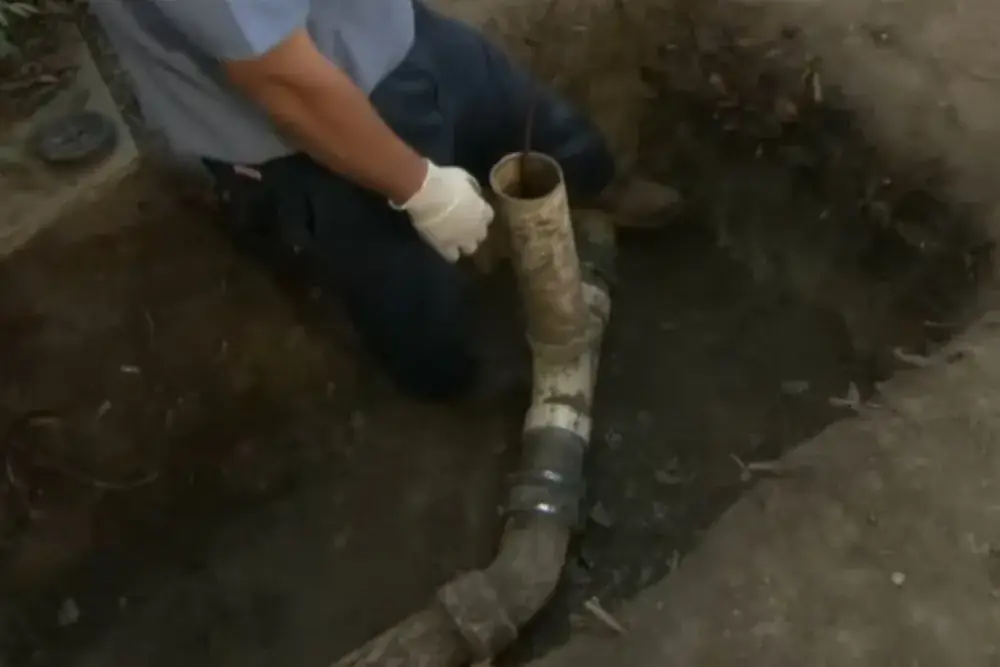
Sewer line repair in Sapulpa, OK fixes the buried pipe that carries wastewater from your house to the city main or a septic tank. If sewage is surfacing in a shower, a floor drain or the yard, stop running water now and call. Our 24/7 emergency line is staffed, and a dispatcher will arrange a licensed plumber for a same-day appointment when available. Until then, keep toilets, sinks and the washer off.
Answered first
Quick answers before the details
Yes. The 24/7 emergency line is answered day and night, including weekends. A dispatcher takes the details, asks which fixtures are backing up and sends a licensed plumber for a same-day appointment when available. Stay off the water until the plumber arrives.
One fixture draining slowly points to a local clog. Gurgling in several drains, sewage in a floor drain or the lowest tub, or a clog that keeps returning points to the main line. A camera is how the plumber confirms it.
Often yes. A single crack or joint can be a spot repair in a small excavation. Lining needs only access pits, though it requires a pipe that is still intact enough to line. Full replacement is the most disruptive and is reserved for collapsed or badly failing pipe.
When a sewer problem is an emergency
Wastewater coming up inside the house is a health hazard, and every flush or shower adds more of it to the floor.
Treat these as urgent: sewage in the lowest tub or shower, a toilet that bubbles when the washer drains, several fixtures backing up together, or sewage pooling in the yard over the line. A single slow sink is usually a branch clog and is a different job, covered under drain cleaning.
If the backup starts at night or on a weekend, call anyway. After-hours dispatch exists for exactly this.
What a failing sewer line looks like
Homeowners rarely say "my lateral has a belly." They say the house smells, the drains gurgle, or the same clog keeps coming back after it was cleared. Those are the real signals, and a few of them point at the buried pipe rather than a fixture.
- Gurgling in a tub or toilet when another fixture drains
- Sewer odor in the basement, garage or yard
- A drain that clears with a snake and clogs again within weeks
- Soft, sunken or unusually green strips of lawn between the house and the street
- Water standing in a floor drain after laundry
- More than one fixture backing up at once
Floor drains and the lowest shower show sewage first, because they sit nearest the line. One slow drain suggests a local clog. Several fixtures failing together suggests the main line.
Need the line looked at today?
A dispatcher is on the line 24/7. Nobody here will pressure you into a repair, and the price is agreed before work starts.
How the break is found
A plumber does not guess at a buried pipe. A typical visit starts with a short interview about which fixtures back up and when. Then the plumber runs a camera on a flexible rod through a cleanout, or through a pulled toilet if there is no cleanout.
The camera shows the pipe from inside: roots entering a joint, a crack, a pipe that has sagged, a joint that has slipped, or a layer of scale in old iron. A locator receiver above ground picks up the camera head's signal, so the plumber can mark depth and position on the lawn or driveway before any digging is discussed.
Sometimes the line must be cleared before the camera can pass. That is normal. Our sewer inspection page explains what you receive from the camera work.
Spot repair, lining or replacement
Three approaches cover nearly every sewer repair. The right one depends on how much pipe is damaged, what it is made of and what sits on top of it.
| Approach | Best fit | Digging | Main limit |
|---|---|---|---|
| Spot repair | One crack, one bad joint, one root entry | A small excavation at the defect | Does not fix a line that is failing everywhere |
| Trenchless pipe lining | Long runs with several defects, pipe still round and connected | Access pits at the ends, little yard disturbance | Needs a pipe that is intact enough to line, and a clean, cleared interior |
| Full replacement | Collapsed, badly offset or deeply bellied pipe, mixed failing materials | Trench or pipe bursting along the run | Most disruptive, and the biggest scope |
The plumber should show you the camera footage and name the defect before recommending any of these. If a quote jumps straight to full replacement without footage, ask why.
For pipe lining, ask the contractor for the resin manufacturer's published data on cure and service life for the exact product. We do not quote lifespans or lining costs here, because those figures belong to the product and the conditions, not to a general page.
Tree roots in the line
Roots do not break a sound pipe. They find a joint or hairline crack where moisture escapes, push in, and then thicken until water cannot pass. A root mass in a clay or older joint can look like a small beard on camera, and one in a long run can look like a rope.
Cutting roots with a jetter or a cutting head restores flow for a while. It does not seal the entry point. If the same joint keeps letting roots in, a spot repair or a liner over that joint is the lasting fix, and the tree's location relative to the line is worth noting for the future.
For routine root clearing, hydro jetting scours the pipe wall with water pressure once the line is open.
Cracked PVC and slipped joints
PVC sewer pipe is smooth, light and resists roots well, so a crack in it usually has an outside cause. Settling soil, a heavy load over a shallow run, a bad bedding job or a stone pressing on the pipe can all fracture it. Joints can also pull apart when the ground moves.
A cracked PVC section is a clean spot repair candidate. The plumber exposes the damaged length, cuts it out, and installs new pipe with couplings made for sewer service. The trench is then backfilled and compacted so the repair does not sag later.
Ask whether the plumber checked the grade. A repair that leaves a dip will catch solids the way the old crack did.
Bellies and offsets
A belly is a low spot where the pipe has sagged and holds standing water. Solids settle there and slowly build up. An offset is a joint that has shifted so that two pipe ends no longer line up, leaving a lip that snags paper and wipes.
On camera, a belly shows as a pool that the camera lens sits in. An offset shows as a step. Neither always demands full replacement. A short belly can be dug out and re-laid to grade, and a single offset joint can be a spot repair.
A long belly, or several in a row, changes the answer. A liner follows the shape of the old pipe, so it will not remove a sag.
Cast iron drain pipe repair
Many older houses have cast iron drain and sewer pipe, especially under slabs and in the walls and crawlspaces of homes built decades ago. Sapulpa is a historic town with homes from its early 1900s oil and glass era, so you may well find iron under an older house. We cannot say how common it is locally, so the camera and the pipe itself tell the story.
Cast iron corrodes from the inside. Scale builds up like a rough crust, narrows the bore and catches paper and grease. From the outside, the pipe can rust, flake and eventually leak at the bottom where water sits. Hammering lightly on a clean section and hearing a dull thud rather than a ring suggests thin walls.
Repair choices are narrower than with PVC.
Sleeves and couplings
A repair coupling or sleeve with a rubber gasket and stainless band can seal a short crack or a failed joint on sound iron. It works only if the pipe on both sides of the damage is solid enough to hold a clamp.
Section replacement
When iron is thin or cracked over a stretch, the plumber cuts out the bad section and joins in PVC or ABS with transition couplings made for iron to plastic. This is common under slabs and in crawlspaces.
Full replacement
If scale is heavy, walls are thin throughout or the pipe has collapsed, replacing the run is often wiser than patching it. Patching one failed joint on a pipe that is failing everywhere tends to lead to another call. Ask the plumber what the camera showed on the sections that were not repaired.
If the iron is under your slab, our slab leak repair page covers how access under concrete works.
What decides the price of sewer line repair
We do not post dollar figures on this page. A real number depends on the pipe and the yard, and the plumber who sees it can give you a clear price before work starts. These are the factors that move it.
A shallow spot repair near a cleanout is a small job. A repair at the far end of a long run, or deep under a driveway, takes more digging, more backfill and more hours. Length matters most for lining and replacement.
Lawn is cheaper to restore than a concrete driveway, a patio, a mature tree's root zone or a finished room. Access through those surfaces adds demolition and rebuild work, and sometimes other trades.
PVC repairs are straightforward. Cast iron, clay or other older pipe may need transition fittings or more removal, and a worn pipe can crumble when cut, which extends the scope.
Spot repair, lining and replacement each carry different labor, equipment and materials. The plumber should lay the options out side by side with the footage and explain what each includes.
Plumbing permits in Sapulpa are separate from building permits and are requested through the city's Building Inspections office by state-licensed, city-registered contractors. If your repair needs a permit, that step belongs in the quote.
Does insurance pay for a sewer line repair?
Many homeowner's policies treat a sudden backup into the house differently from a worn or root-damaged buried line. Some pay for water damage inside, some require an added endorsement for sewer or drain backup, and many exclude wear and tear on the pipe itself. We cannot say what yours covers.
Check your policy and ask your agent before the plumber leaves, not after. Photograph the sewage, the affected floor and any damaged belongings, and keep the plumber's camera footage and written findings. If you rent, tell your landlord right away and send the same photos.
What to do while you wait
- Stop using water: no flushing, showers, laundry or dishwasher
- Keep children and pets out of any area with sewage on the floor
- Do not run drain chemicals, which can splash back and harm pipe and skin
- Move belongings off wet floors and wear gloves and boots if you must step in it
- Photograph the backup and note when it started
- Locate your cleanout, if you have one, so the plumber can reach it fast
- If you smell gas or see sparks near wet wiring, leave and call 911
Sewer repair across Sapulpa and nearby
We dispatch from 215 E Dewey Ave and serve Sapulpa plus Kellyville, Mounds and Glenpool. The city's Utility Maintenance Department maintains city water and sewer lines. If sewage is surfacing in the street or you suspect the city main is blocked, ask the city's Utility Maintenance Department about it. A plumber can tell you whether your backup is inside your own line.
That distinction matters, because a clog in your lateral and a clog in the main need different people. A camera pass showing where the blockage sits settles it. If the trouble is on the supply side instead, see our water line repair service.
Sources and standards
Sewer repair follows the UPC or IPC as adopted locally for slope, bedding and testing, and trenchless lining is described by ASTM F1216, with the City permit decided by Building Inspections. Permit and edition questions belong to the city office, and license questions to the state board.
Sewer line repair questions
They can, if the entry point stays open. Cutting restores flow but does not seal the joint. A spot repair or liner at the entry point is what stops repeat intrusions.
Sometimes. Sound iron with a localized crack can take a sleeve or a short section swap. Iron that is scaled thin throughout is usually better replaced, because patches on failing pipe keep coming back.
The city's Utility Maintenance Department maintains city water and sewer lines. Where the city's part ends and yours begins is not something we can state. Ask the city or your plumber, and have the camera findings ready.
Plumbing permits are separate from building permits and go through the city's Building Inspections office by state-licensed, city-registered contractors. Minor repairs are the main exception. Ask the plumber who is quoting your job whether yours needs one.