
A pipe leaking beneath a concrete floor is an emergency even when the damage looks small, because the water has nowhere to go but up into your flooring and out through your meter. Our slab leak repair line in Sapulpa, OK runs 24/7.
While you wait, close the main shutoff valve, move belongings off the floor and stay off wet areas near outlets.
A slab leak is a break in a water or drain line that runs in or under the concrete foundation of a house.
Answered first
Quick answers before the details
A warm spot on the floor, the sound of running water when everything is off, damp carpet edges, a jump in your bill and a meter that moves with all taps closed are the usual signs. A plumber confirms with a pressure test and listening equipment.
Yes. The line at (855) 575-2890 is open 24/7. A dispatcher takes the details, tells you what to shut off, and lines up a licensed plumber, with same-day appointments when available. Close the main valve and stay off wet floors while you wait.
Sometimes. Spot repair means a small opening. Rerouting avoids breaking the slab but opens walls. The plumber lays out both and a clear price before work starts.
What a slab leak sounds, feels and looks like
Homeowners usually notice one of a handful of things first. A tile or hardwood floor feels warm in one spot, as if a heater were under it. A faint hiss or rushing sound comes from the floor in a quiet house. Carpet edges turn damp or smell musty, grout lines darken, or a baseboard starts to swell.
Others see it on paper, with a water bill that jumps or a meter that keeps moving after every fixture is closed. Low hot water pressure and a water heater that never seems to stop running point the same way. Any one of these is a reason to call, and two or three together make a slab leak likely.
When a slab leak becomes an emergency
Treat it as urgent when water is visibly spreading across the floor, a warm spot is growing, you hear a steady hiss, or the meter races with everything off. Close the main valve first. A leak under a slab can wash soil out from beneath the concrete over time and soak flooring, cabinets and drywall from below.
Night and weekend leaks do not wait for business hours, so neither does the dispatcher. We do not diagnose by phone, but the call tells the plumber what tools to bring.
Floor feels warm or sounds wrong?
A dispatcher is on the line 24/7. Nobody here will pressure you into a repair, and the price is agreed before work starts.
Why pipes fail under a slab
Pipes in or beneath concrete are buried with no way to see them. Copper can pit from the inside or wear where it rubs against rough concrete as the house expands and contracts with heat and moisture. Older steel lines corrode. Plastic lines can fail at joints, and high water pressure speeds up every one of these problems.
Sapulpa's historic town center and its newer subdivisions mix many building eras, and we cannot say how many local homes are slab built. The practical point is that the plumber we send looks at what your house actually has, and will tell you the pipe material before recommending a repair.
How the leak is found under concrete
Locating a slab leak without breaking the floor is the first job. A visit usually starts with a meter test to confirm water is leaking and a pressure test to learn which line it is on.
- Acoustic listening. Ground microphones pick up water escaping under pressure and locate it to a small area. Noisy surroundings and low-flow leaks can hide the sound.
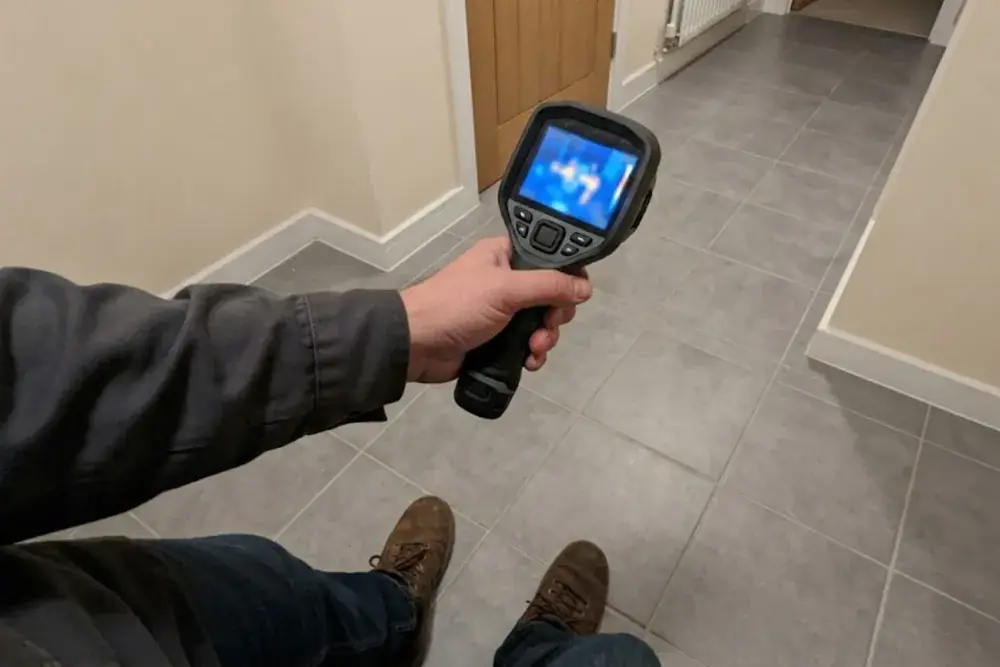
- Thermal imaging. A camera shows heat from a hot water line under the floor. It works best for hot leaks and cannot see through thick concrete on its own.
- Line tracing and tracer gas. The plumber maps the pipe path, and tracer gas can pinpoint a stubborn leak. It is slower and used when other methods leave doubt.
- Moisture meter. Readings show how far the water spread, but not the source.
Our broader leak detection page explains each method and its limits.
Repair options and how they compare
There are three basic choices, and the right one depends on the pipe, how many leaks exist and where the lines run.
| Option | What happens | Best when | Trade-off |
|---|---|---|---|
| Spot repair | The slab is opened over the leak and the pipe is patched or replaced | One leak, sound pipe elsewhere | Concrete and flooring get cut, and a new leak can appear nearby |
| Reroute overhead | The failed line is capped and a new line runs through walls or the attic | A bad line under the slab, or repeated leaks | New access holes in drywall, and more work than a patch |
| Repipe | Most or all supply lines are replaced | Pipe is worn or failing in several places | Largest job, the most lasting |
Spot repair
A plumber marks the spot, saws and jackhammers a small opening, repairs the pipe and patches the concrete. It is the least invasive path, but flooring over the cut may not match when the work is done. Ask whether patching the surface is part of the price.
Rerouting the line
Instead of digging, the plumber abandons the leaking run and installs a new one above the floor. It avoids breaking more concrete, but it is not invisible, since walls and soffits may need to be opened and closed.
Repiping
When pipe is old or has leaked more than once, replacing it can be a better choice than chasing one failure after another. See repiping for that decision. Ask the plumber to explain the evidence so you can judge it yourself.
What to do while you wait
- Close the main water shutoff, then open a faucet to drain pressure.
- Move rugs, furniture and electronics out of the wet or warm area.
- Turn off power to a wet room only if the breaker is dry and reachable. Otherwise call 911.
- Do not run the water heater with the supply off. Turn its power or gas control off.
- Photograph wet floors, stains and the meter reading for your records.
- If you smell gas, leave the house, call 911, then your gas utility.
What decides the price of a slab leak repair
Slab work varies a lot, so call for your real number. The plumber explains a clear price before work begins.
A leak in an open hallway is easier than one under a kitchen island or a finished tile floor. Access sets the labor.
A spot repair, a reroute and a repipe differ in materials, time and finishing, so the choice moves the total more than anything else.
Copper, steel and plastic need different fittings and methods. Old pipe may need more replaced than the leak alone suggests.
Cutting concrete is one job and patching flooring, drywall and paint is another. Ask what is included and what a separate contractor handles.
Emergency and after-hours calls may price differently from a scheduled visit. Ask when you call.
Insurance and slab leaks
Policies differ on slab leaks. Some cover water damage from a sudden leak but not the pipe repair or the access cost, and long-term seepage is often treated differently. Check your policy and call your agent before work starts. Photos, the meter reading and the plumber's written findings help.
Slab leak help around Sapulpa
We dispatch across Sapulpa, Glenpool, Kellyville and Mounds. Plumbing permits in Sapulpa are separate from building permits and are requested through Building Inspections by state-licensed, city-registered contractors. Ask the plumber whether your repair needs one, and verify any plumber's license with the Oklahoma Construction Industries Board.
Sources and standards
A slab leak repair follows the UPC or IPC as adopted locally, and locating the leak with acoustic or tracer gas equipment follows the equipment maker's procedure. For which code edition the city enforces, the building inspections office is the source, and the state board is the source for licenses.
Slab leak questions
No, though a long-running leak can wash soil from under concrete and add to cracking. Foundation movement can also break pipes. A plumber addresses the pipe, and a foundation specialist addresses the structure.
No. In-floor heat, sunny windows and ducts can warm a floor. A warm spot with a hiss, a high bill or a moving meter is much more likely a hot line leak.
Plumbing permits in the city are separate from building permits, and minor repairs are often an exception. Ask the plumber, or ask City of Sapulpa Building Inspections.