
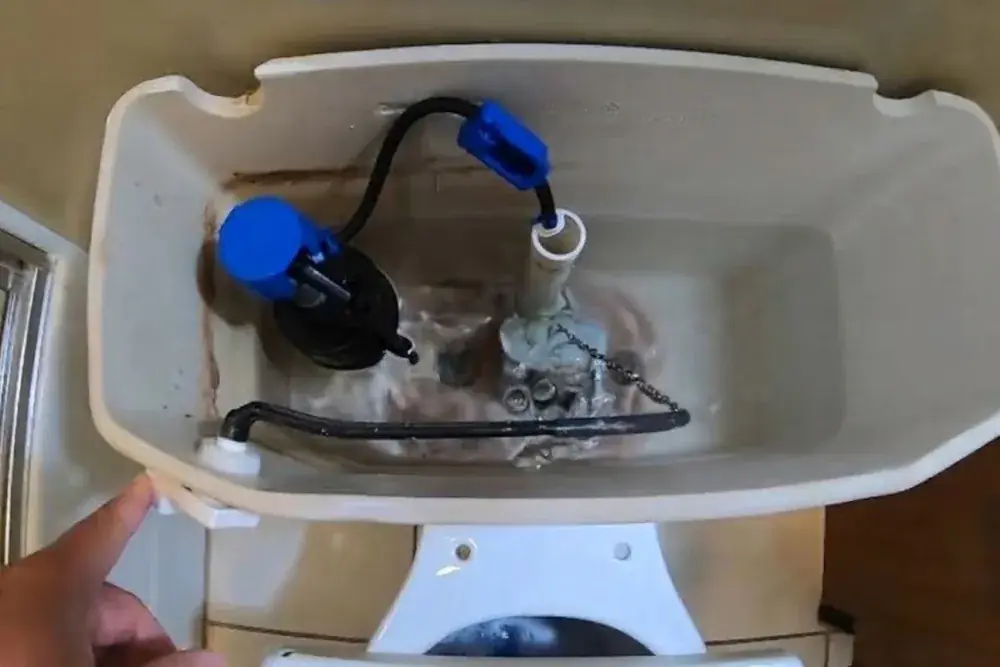
A toilet that overflows, leaks across the bathroom floor or will not stop running needs attention right away, and our line is open 24/7.
While you wait, turn the small valve behind the toilet clockwise to stop the refill, lift the tank lid and prop the float up if the bowl is rising, and put towels down.
Toilet repair in Sapulpa, OK covers fixing the parts inside the tank, the seal at the floor, and replacing the whole fixture when repair no longer makes sense.
Answered first
Quick answers before the details
The flapper is not sealing, the chain is tangled, or the fill valve is not shutting off. Food coloring in the tank shows a flapper leak within about fifteen minutes. The parts are standard, so a repair is often a short visit.
Yes. The line at (855) 575-2890 is open 24/7. A dispatcher asks what the toilet is doing, tells you what to shut off, and lines up a licensed plumber, with same-day appointments when available. Turn the supply valve off and stop flushing while you wait.
If only one toilet is blocked and the rest of the house drains, it is likely a local clog. If a tub or floor drain also gurgles or backs up, the main line is the more likely cause. Stop using water and call.
If the bowl is about to overflow
Stay calm and act in this order. Take the lid off the tank and lift the float or push the flapper closed so no more water enters the bowl. Then turn the supply valve on the wall or floor clockwise until it stops. If the valve is stuck or leaks when you turn it, shut off the main water to the house.
Do not flush again to see if it clears. A second flush on a blocked line puts more water in the bowl, and that water can reach the floor. Mop up with gloves on, since the water may carry sewage. Our faucet repair page covers what to do when the valve itself will not close.
Water at the base of the toilet
A puddle around the bottom has a few possible causes, and it helps to tell them apart. Wipe the toilet dry, then check the supply connection, the tank bolts and the base separately.
- Supply line or valve. A drip at the braided line or the valve shows up at the wall end. Tighten the nut by hand and a quarter turn with a wrench.
- Tank bolts or gasket. Water running down the outside of the bowl from the tank points to worn rubber washers.
- Wax ring or flange. Water at the base only when you flush, or a sewer odor, means the seal under the toilet has failed.
The wax ring is a soft seal between the toilet horn and the closet flange, the ring bolted to the floor that connects to the drain. A broken flange, a rocking toilet or a damaged subfloor turns a simple reseat into a bigger repair. A plumber pulls the toilet, inspects the flange and floor and sets it again on a new seal.
Toilet acting up at a bad hour?
A dispatcher is on the line 24/7. Nobody here will pressure you into a repair, and the price is agreed before work starts.
A toilet that runs, hisses or refills on its own
A running toilet wastes water and shows up as a higher bill. The usual cause is the flapper, the rubber disc that seals the tank outlet. It warps, hardens or gets caught on a chain that is too short or too long. Add a few drops of food coloring to the tank, wait fifteen minutes without flushing, and see whether color appears in the bowl. If it does, the flapper is leaking.
The fill valve is the other suspect. A hiss, a tank that keeps topping up, or water spilling into the overflow tube suggests a worn valve or a float set too high. Replacing a flapper or fill valve is a small repair, and parts come in standard sizes. If the tank is cracked or the parts are deeply scaled, replacing the toilet may be smarter.
A silently running toilet can also be what a moving water meter is hiding, so see our leak detection page if the meter keeps turning.
Clog or something bigger
One toilet that will not flush, with the sink and tub draining normally, is almost always a clog in the trap or short branch. A flange plunger with a good seal and steady pushes clears most of them. A closet auger reaches further than a plunger without scratching porcelain.
Warning signs of a larger problem are different: gurgling from another drain when you flush, water backing into a tub or floor drain, several fixtures slow at once, or the toilet filling on its own when the washing machine drains. Those point to the main line. See the section on sewer backups below.
Never pour drain cleaner into a standing toilet bowl or mix chemicals. Cleaners can splash back on whoever plunges next.
When a toilet backing up is a sewer problem
If the toilet backs up along with a tub, shower or floor drain, the blockage is probably past the branch lines. Stop using water in the house. Every drop sent down goes to the lowest open drain. Call, and tell the dispatcher which fixtures are affected, because that helps the plumber bring a drain machine or camera.
The plumber will usually clear the line and then may camera it to learn what caused it, such as roots, a crack or a belly. Our sewer line cleaning page explains that process. The city of Sapulpa's Utility Maintenance Department maintains city water and sewer lines, so a backup that starts past your property line is something to mention on the call.
A rocking or loose toilet
A toilet that shifts when you sit is not safe to ignore. Movement breaks the wax seal, which then leaks slowly into the subfloor, and rot can follow without any visible puddle. Check the closet bolts at the base. Tighten them alternately, a little at a time, because overtightening cracks the porcelain.
If it still rocks, the floor may be uneven, the flange may sit too low, or the subfloor may be soft. Shims under the base help only on an otherwise sound floor. A soft or stained floor around a toilet is a sign to have the plumber check for hidden water damage before putting anything back.
Installing a new toilet
Replacement makes sense for repeated clogs, cracks in the bowl or tank, constant parts failures and fixtures that waste water. A plumber measures the rough-in, which is the distance from the wall to the center of the drain. The common size is 12 inches, though 10 and 14 exist, and a mismatch means the toilet will not fit.
Other choices are round or elongated bowl, standard or comfort height, and gallons per flush. Federal rules cap new toilets at 1.6 gallons per flush, and WaterSense models use no more than 1.28. A visit includes removing the old unit, checking the flange and subfloor, setting a new seal, leveling, connecting the supply and testing for leaks. Read the manufacturer's installation instructions that come with your model.
For other fixture work, see our plumbing installation page.
What to do while you wait
- Turn the supply valve clockwise and lift the tank float or push the flapper closed.
- Stop flushing and ask everyone in the house to stop running water.
- Put towels or a bucket around the base and wear gloves for cleanup.
- Shut off the main water valve if the supply valve will not close.
- Keep children and pets out of the bathroom if overflow water may contain sewage.
- Photograph the damage in case you need it for an insurance claim or your landlord.
What decides the price of toilet repair
The cost depends on the problem. Call for your real number and expect a clear price before work starts.
A flapper or fill valve is a small fix. A cracked tank or a failed flange is a bigger job.
A soft subfloor or broken flange adds repair time before the toilet can be set.
A single-fixture clog is different from a main line backup, which may need a machine or camera.
A new toilet adds the fixture cost, its features and the install labor.
Nights and weekends may price differently from a weekday appointment. Ask when you call.
Toilet help across the Sapulpa area
The plumber we send serves Sapulpa and the nearby towns, including Mounds. If the job involves a new toilet or a floor repair around the flange, ask whether a permit applies before work begins.
Insurance and landlord notes
Policies differ. Many cover sudden water damage but not a slow leak or the toilet itself, and sewer backup coverage is often an optional add-on. Check your policy. If you rent, tell the landlord before repairs and keep photos and the plumber's written report.
Sources and standards
Replacement toilets are tested to flush volume levels such as the EPA WaterSense 1.28 gallon mark, and closet connections follow the UPC or IPC as adopted locally. The Oklahoma Construction Industries Board license lookup confirms a plumber, and Building Inspections answers permit questions.
Toilet repair in Sapulpa and nearby
Same-day appointments are available when the schedule allows. The plumber checks your rough-in and flange first. We do not diagnose by phone.
You can snug the closet bolts a little at a time. If it still rocks, call, because the seal may already be leaking into the floor.
Plumbing permits in Sapulpa are separate from building permits, and minor repairs are the main exception. Ask the plumber, or ask City of Sapulpa Building Inspections about your specific job.