
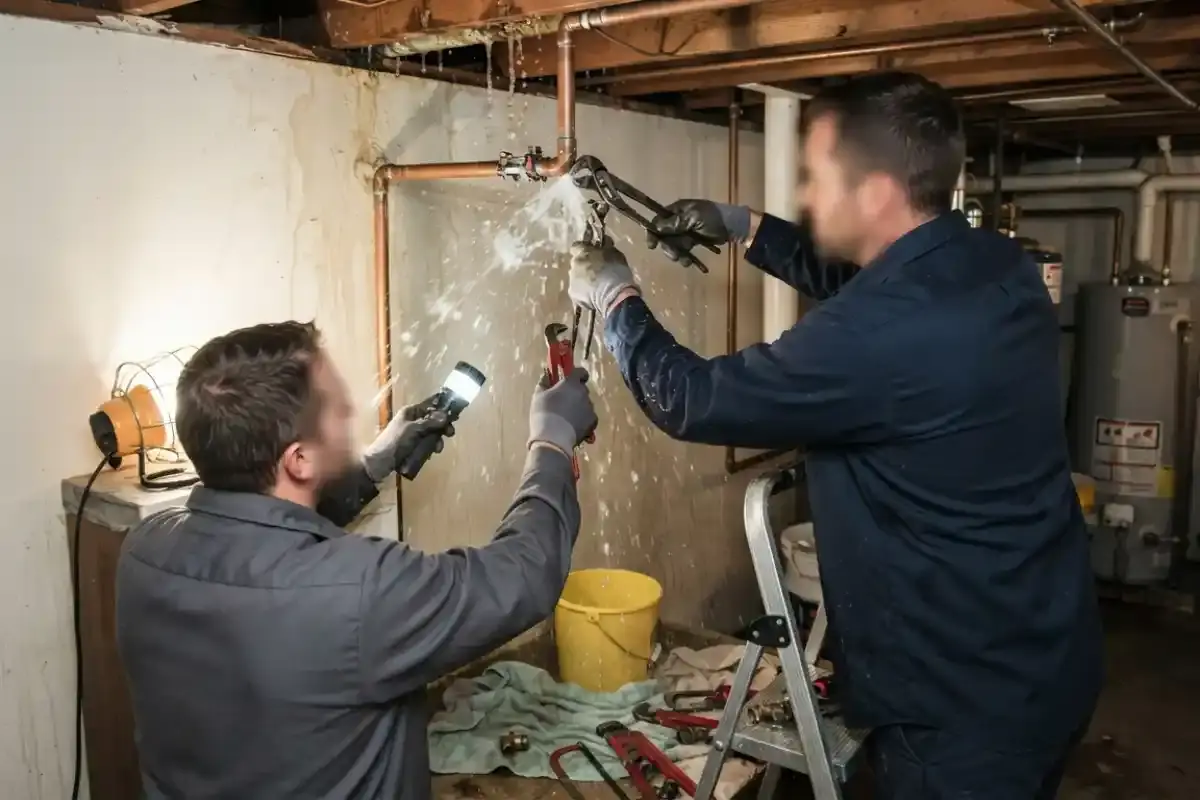
Burst pipe repair in Sapulpa, OK is the emergency job of stopping water from a split or broken supply pipe and then replacing the damaged section. If water is spraying, close the main shutoff valve first, then call our 24/7 emergency line. A dispatcher will arrange a licensed plumber for a same-day appointment when available. Until then, keep clear of any wet electrical outlets and fixtures.
Answered first
Quick answers before the details
Yes. The 24/7 emergency line is open nights, weekends and holidays. A dispatcher asks where the water is coming from and whether it is shut off, then arranges a licensed plumber for a same-day appointment when available. Close the main valve while you wait.
It is commonly where the water line enters the house, in a basement, crawlspace, garage, utility room or by the water heater. There may also be a valve at the meter. Find it before you need it, and test that it turns.
Keep the house warm, open cabinet doors under sinks on exterior walls, and let a small stream run from a faucet on the coldest side during a hard freeze. These steps lower the risk but do not remove it.
First five minutes after a pipe bursts
- Close the main water shutoff, usually at the meter or where the line enters the house
- Open a faucet at the lowest point in the house to drain remaining water
- Turn off the water heater (electric breaker off, or gas control to pilot) so it does not run dry
- If water is near outlets, ceiling lights or the panel, stay out of the area and cut power at the panel only if it is dry and you can reach it safely
- Move rugs, electronics and furniture out of the wet area, and set out towels or a wet vac if you have one
- Photograph and film everything before cleanup begins
- Call us and tell the dispatcher where the water is and whether it has stopped
If you cannot find or close the shutoff, say so on the call. The plumber can look for another valve, such as one at the meter. Who may operate the meter valve is a question for the City of Sapulpa Utility Maintenance Department.
Frozen pipes and how they split
Water expands as it turns to ice. The ice itself is not what usually splits the pipe. As an ice plug forms, it traps water between the plug and a closed faucet, and the rising pressure in that pocket cracks the wall of the pipe. The split often sits a few feet away from the ice.
That is why a pipe can look fine while frozen and then flood the moment it thaws. The crack was there, but ice was holding the water back.
Pipes at greatest risk run along exterior walls, through unheated crawlspaces, attics and garages, or sit near a vent or hose bib where cold air leaks. Standard hose bibs and the short runs behind them are common failures when a freeze catches a hose still attached.
Water still running?
A dispatcher is on the line 24/7. Nobody here will pressure you into a repair, and the price is agreed before work starts.
How cold Sapulpa actually gets
Tulsa is the nearest National Weather Service climate site, and Sapulpa is about 12 miles southwest. Tulsa's normal January low is 28 F (1991 to 2020), so the average January night bottoms out below freezing. A pipe that survives most winters has little margin when a hard cold snap arrives.
February 2021 showed how far it can go. Tulsa recorded lows of about -13 to -14 F on February 16, according to the National Weather Service and the Oklahoma Mesonet. The Mesonet reported that the cold damaged more than 120 Oklahoma public water systems.
The practical lesson is simple. Before a forecast freeze, open cabinet doors under sinks on exterior walls, let a pencil-thin stream run from one faucet on the coldest side and know where your main shutoff is.
Thawing a frozen pipe without making it worse
If a pipe is frozen but not yet split, you may be able to thaw it safely. Open the faucet it feeds first, so melting water and steam have a way out. Then apply gentle heat starting nearest the faucet and working back toward the ice.
- A hair dryer on low or medium works well
- A heating pad wrapped on the pipe is safe and slow
- Warm towels soaked in hot water also work
Never use a torch, a propane heater or any open flame, and keep kerosene and space heaters away from pipes. Open flame can ignite framing and scorch plastic pipe. If you cannot find the frozen section, or the pipe is inside a wall, stop and call. A bulge, a crack or a drip means the pipe is likely already split.
Bursts that have nothing to do with freezing
Not every burst is a cold-weather problem. Pipes also split from high water pressure, water hammer from fast-closing valves, corrosion that thins the wall over years, a bad solder joint or fitting, or physical damage from a nail, a shovel or a settling slab.
Signs of a non-freeze burst can be quieter. A damp wall, a stained ceiling, a hissing sound or a spike in the water bill can point to a pinhole or a split that has been leaking slowly. If it is ongoing, the water bill may be the first clue. See our leak detection page for how plumbers trace those.
Older galvanized or poorly soldered lines tend to fail in more than one place, which is a reason to talk about repiping after the emergency is over.
How the plumber finds and fixes the split
A typical emergency visit begins with confirming the shutoff and checking that the water heater and electrical are safe. The plumber then locates the break, which is often obvious from the water or the stain. For concealed splits, thermal imaging and moisture meters help track water through walls, and a small inspection opening is cut where the break is expected.
The damaged section is cut out and replaced. Pipe material, access and the extent of the damage decide how much comes out. After the repair, the plumber pressure tests the line, restores water slowly and checks fittings and fixtures for leaks.
Drying the building is a separate job. A plumber stops the water and repairs the pipe, but wet drywall, insulation and flooring usually need a water mitigation company. Your insurer may have a preferred one, so ask when you call about the claim.
Copper, PEX and CPVC repair options
Each pipe material has its own repair method.
Copper
A split in a rigid copper pipe is usually cut out and replaced with a new section. The plumber joins it using soldered fittings, press fittings or compression couplings. Copper can also pinhole inside from corrosion, and one pinhole often means others are forming. If a long run is pitted, replacing more than the split section may be sensible.
PEX
PEX is flexible and can expand slightly when frozen, so it often survives freezes better than rigid pipe. When PEX fails, the damaged part is cut out and replaced with crimp, clamp or expansion fittings made for the brand in use. Different brands do not always mix.
CPVC and galvanized
CPVC turns brittle with age and sun and can crack when cold. Galvanized steel corrodes inside, so a split often has many weak points nearby. In both cases, the plumber should tell you whether the rest of the line looks sound.
Temporary fix or permanent repair
A clamp, a rubber patch or push-fit coupling can stop a leak quickly. These are valid emergency measures. The question is whether to treat them as permanent.
| Option | Use | Watch for |
|---|---|---|
| Clamp or patch | Stops water until a full repair | Not for hidden pipes or long-term use |
| Push-fit or press coupling | Permanent on sound pipe when installed correctly | Pipe ends must be clean and square |
| Section replacement | Standard fix for a split | Access to the wall or ceiling |
| Longer run replacement | Corroded or repeatedly failing pipe | More opening and patching |
Ask the plumber which category your repair falls under and what, if anything, should be revisited later.
What to document for insurance and landlords
Start before the cleanup. Take photos and video of the burst pipe, the water, the damaged walls, floors and belongings, and note the time you discovered it. Keep the damaged section of pipe if you can, since an adjuster may want to see it.
Save the plumber's invoice and written description of the cause and the repair. If you are a tenant, notify your landlord or property manager immediately and send your photos, then keep their reply.
Keep receipts for everything: towels, fans, motel nights, emergency drying. Do not throw out damaged items until your insurer says you can, apart from anything unsafe such as soaked insulation or sewage-contaminated material.
What decides the price of burst pipe repair
We do not post dollar figures. The plumber who sees the damage gives a clear price before work starts. These are the factors that shape it.
An exposed pipe in a garage is quick to reach. A pipe in a finished ceiling, a slab, or a wall behind tile needs cutting, access and patching.
One split means one repair. A freeze that cracks several points, or a corroded line that keeps failing, means more cutting and more material.
Copper, PEX, CPVC and galvanized each need different fittings and techniques, and matching old and new pipe can add parts.
A call in a freeze, with many homes affected, may involve more waiting for parts. After-hours dispatch is a service in itself, and the plumber will explain any charge up front.
Drying, mold prevention and rebuilding walls are separate from the plumbing repair and often handled by other trades.
What a burst pipe typically does and does not do to your coverage
Homeowner's policies often cover sudden and accidental pipe bursts and the resulting water damage inside the house. They commonly exclude gradual leaks, neglected maintenance and, in some cases, damage to a vacant home. Some policies expect you to take reasonable steps, such as shutting off water and heating the house.
Check your policy and call your insurer or agent soon after the event. We cannot say what your policy covers.
Burst pipes in Sapulpa and nearby
We dispatch from 215 E Dewey Ave and serve Sapulpa, Kellyville, Mounds and Glenpool. Shutting off the water yourself matters most during a widespread freeze, when every plumber is busy. If the pipe that failed is the buried line, see our water line repair page.
Sources and standards
Emergency pipe repair follows the UPC or IPC as adopted locally for materials and joints, and drinking water pipe and fittings are normally certified to NSF/ANSI 61. Ask City of Sapulpa Building Inspections which edition applies and whether a permit is needed.
Burst pipe questions
Sometimes. Open the faucet, apply gentle heat such as a hair dryer from the faucet end back, and never use open flame. If the pipe is in a wall, bulging or leaking, call a plumber.
Often sudden bursts are covered, while gradual leaks are not, but policies vary. Check yours and document everything.
Tulsa dropped to about -13 to -14 F in February 2021, and the Oklahoma Mesonet reported that the cold damaged more than 120 Oklahoma public water systems. That is a reason to insulate exposed pipes and know your shutoff before a forecast freeze.