
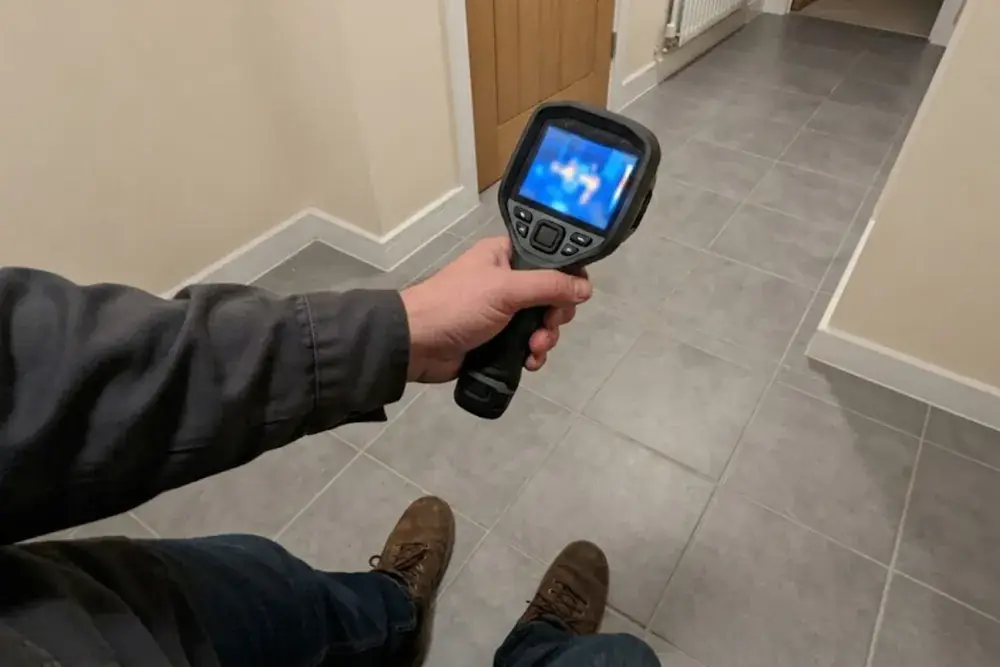
In a slab foundation home, the concrete floor sits directly on the ground, so the drain pipes run under or through it and the water supply lines may too. That is the short answer to how plumbing works in a slab house in Sapulpa, OK. With no crawlspace under the floor, leaks and clogs are harder to see. Knowing the layout helps you spot trouble sooner.
Three layers of plumbing in a slab house
Think of the house as having three zones. The first is the pipework under the slab, mostly drains. The second is the wall zone, where supply lines drop or rise to fixtures. The third is the attic or ceiling space, where many slab homes run supply or hot water lines overhead to avoid the concrete.
| Zone | What runs there | What a problem looks like |
|---|---|---|
| Under the slab | Drain and sewer lines, sometimes supply | Sewer smell, slow drains in several fixtures, a warm or damp floor spot |
| In the walls | Supply stubs, vent pipes, fixture valves | Stain on drywall, mildew, hissing sound |
| Attic or ceiling | Supply, vent stacks, sometimes the water heater | Ceiling stain, drip sounds, damp insulation |
Your home may differ. Builders choose layouts, and remodels change them.
Where the drains go
Drain lines for toilets, tubs, sinks and the washer run through the slab to a main line that leaves the house toward the sewer or a septic system. They rely on gravity, so they slope. The plumber who built the house set that slope before concrete covered it, and a settled slab can reduce it.
Because drains carry waste, a crack or poor joint shows up first as a clog pattern. If the toilet gurgles when the washer drains, or a floor drain bubbles, suspect a shared line. A camera inspection through a cleanout shows the pipe from inside. The leak detection page covers how sound and moisture tools help find water loss before any concrete is broken.
Think there is a leak under the floor?
A dispatcher is on the line 24/7. Nobody here will pressure you into a repair, and the price is agreed before work starts.
Where the water supply goes
Supply lines vary the most. Some slab homes run copper or PEX under the floor and up into walls. Others route supply through the attic or along exterior walls. Water heaters in slab homes often sit in a garage or closet, with hot lines going up into the attic space.
One fact helps with leak checks. The city reads meters in 1,000-gallon units, per the City of Sapulpa Utility Billing page, so a meter that keeps moving when everything is off points to a leak somewhere on your side. A plumber can also test pressure with a gauge on a hose bib.
What a slab leak looks and sounds like
Water escaping under a slab does not always show on the surface. Watch for these signs.
- A warm spot on the floor that is not near a vent, which suggests a hot water line
- Wet carpet or baseboards with no visible source
- The sound of running water when every fixture is off
- A water bill that rises with no change in habits
- Low water pressure that appears gradually
- Mildew smell or lifting flooring at one location
If you see two or more of these, shut off the main water valve and check the meter. If the dial or digital indicator still moves, there is water loss between the meter and the fixtures.
How repairs reach pipe under concrete
A plumber does not guess. The first step is to find the exact spot with a leak detector, then confirm with a pressure test on isolated lines. After that there are three routes.
- Spot repair through the slab. The floor is cut above the leak and the pipe is fixed.
- Reroute. A new line goes through the attic or walls, and the old one is capped.
- Pipe lining or replacement. A section of pipe is relined or replaced in place.
Each route has trade-offs. Spot repairs are direct but need floor work. Rerouting avoids concrete but opens walls and ceilings. Replacement of the whole run through repiping may make sense when the pipe is old and has failed in more than one place. Slab leak repair covers the options in more detail.
Questions to ask before approving work
- Which route is proposed, and why that one?
- How will the plumber protect floors and furniture?
- Will the repair need a permit?
- What flooring finish is included after the concrete is patched?
- Is there a way to confirm the leak before cutting?
Sapulpa permit and billing notes
The City of Sapulpa Building Inspections page says plumbing permits are separate from building permits and are requested by contractors who are licensed by the State and registered with the City. The same page says work done without permits can be fined at least double the permit and inspection fees. Slab repairs often involve cutting concrete and replacing pipe, so ask your plumber how permits and inspections will be handled and call Building Inspections at 918-248-5910 for specifics.
On the billing side, the City of Sapulpa Utility Billing page says staff provide leak adjustments. The page does not spell out who qualifies, so call Utility Billing at City Hall, 425 E. Dewey Ave., before you assume anything. Keep your plumber's written report, since it documents the leak and its repair.
Homes near Sapulpa
Census ACS data lists the median year built in Glenpool at 1995, so many homes there are younger than the early 1900s houses in Sapulpa's historic core. Age affects pipe materials and foundation type, and a plumber confirms both on site. In Mounds, about 10 miles south-southeast of Sapulpa, ask the same question instead of assuming what is under your floor.
Sources and standards
Slab plumbing rules come from the UPC or IPC as your city has adopted them, including slope for drains, and 811 locating applies whenever concrete is cut or ground is dug. The Oklahoma Construction Industries Board license lookup confirms a plumber, and Building Inspections answers permit questions.
Frequently asked questions
Most main drain lines are, yes, since the toilets, tubs and floor drains sit at slab level. Kitchen and bath sink drains usually leave through the wall and join the line below.
A warm floor spot or a water heater that runs often suggests a hot line. A plumber can confirm with a pressure test and listening gear.
Shutting off the main and drying the area is something you can do. Locating and repairing the line needs specialized tools and often a permit, so call a licensed plumber.
Policies differ on what they cover, and many treat the pipe repair and the resulting water damage differently. Check your policy and ask your agent before work starts.
Common spots are near the water heater, the front exterior wall or a utility closet, plus the valve at the meter. Find yours now, before you need it.
If you suspect water is running under your floor, call the 24/7 line at (855) 575-2890 and a dispatcher will book a licensed plumber.