
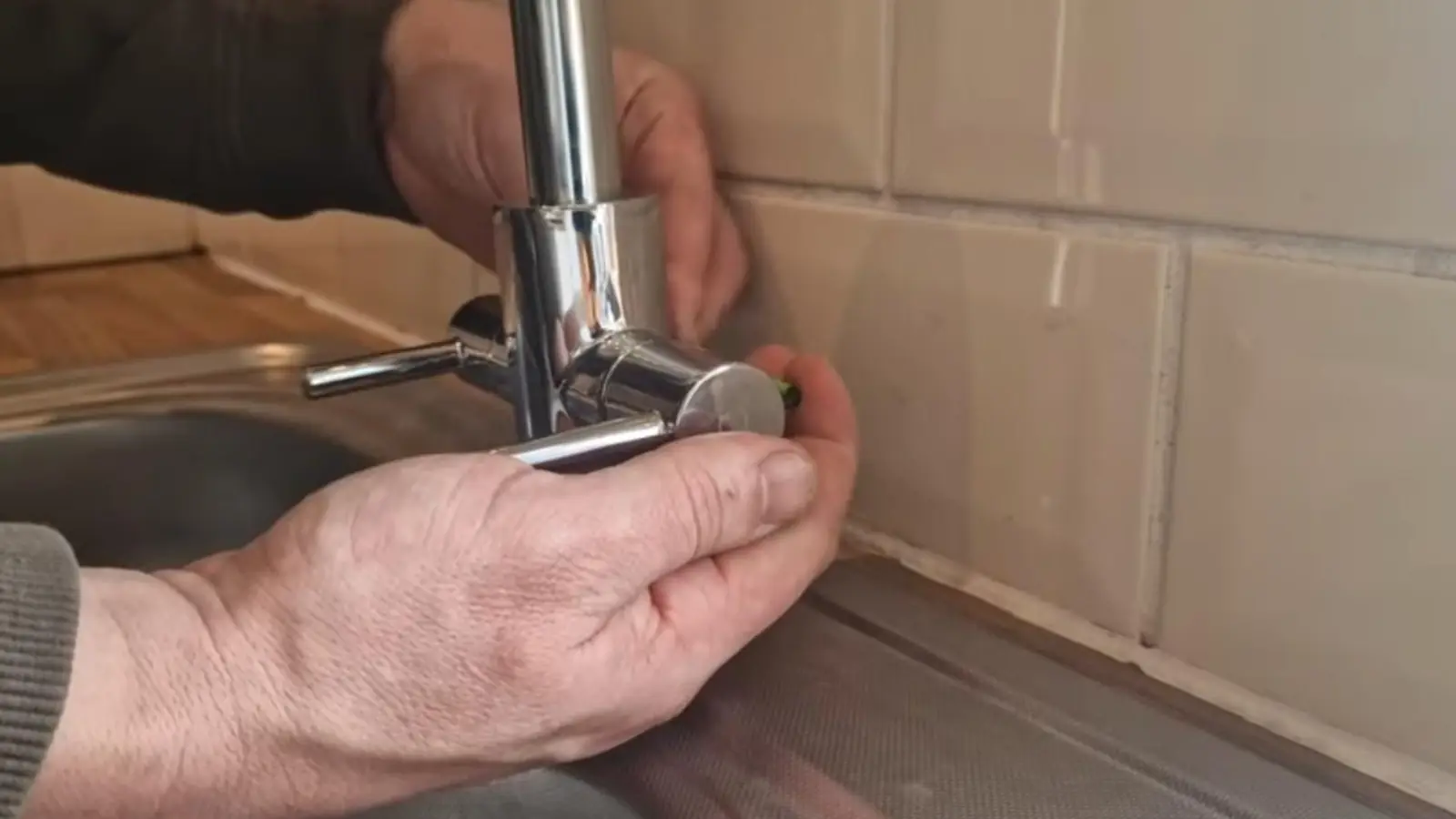
Tub faucet plumbing is two separate things: the trim you can see and touch, and the valve body hidden inside the wall. The trim is the handle, the spout and the cover plate. The valve is the brass or plastic fitting that mixes hot and cold water and feeds the spout and showerhead. In Sapulpa, OK most tub faucet problems end with a new cartridge or trim from the front. A failed valve body means opening the wall.
Start by sorting trim from valve
Before shopping for parts, figure out which side of the wall the problem lives on. Here is a quick way to decide.
| What you notice | Likely part | Needs wall opened? |
|---|---|---|
| Handle is loose, cracked or worn | Trim | No |
| Drips from the spout when handle is off | Cartridge or seat | Usually no |
| Water will not shut off completely | Cartridge, or worn valve seats | Sometimes |
| Hot and cold swing or run lukewarm | Cartridge or balance spool | Usually no |
| Leak shows in ceiling or wall below | Valve body, supply joint or the wall plumbing | Yes |
| You want a new style from a different brand | New trim kit, maybe a different valve | Often yes |
Treat that table as a guide. Only the plumber standing at your tub can confirm it.
The main valve types
Most homes use one of a handful of designs, and each fails in its own way.
Two or three handle compression
Separate hot and cold handles with rubber washers that press on a seat. Drips almost always mean a worn washer or a pitted seat.
Single handle cartridge
One lever moves a cartridge that mixes the water. Wear shows up as drips, stiff turning or poor temperature control.
Pressure-balancing
A cartridge or spool shifts to hold temperature steady when someone flushes a toilet elsewhere. Common in newer homes.
Thermostatic
A temperature-sensing element holds an exact setting. Found in higher-end remodels and more costly to replace.
Why brand matters
Delta, Moen, Kohler and others each make their own cartridges, and trim kits are designed around their own valve body. A trim from one brand rarely fits another brand's valve without a conversion part. If you plan to change the look of the tub area, ask whether your existing valve accepts the trim you like, or whether a universal rough-in valve is a better fit.
Tub handle leaking or stuck?
A dispatcher is on the line 24/7. Nobody here will pressure you into a repair, and the price is agreed before work starts.
Rough-in depth, in plain words
Rough-in is the stage where the valve body is mounted in the wall before the wall surface goes up. The manufacturer's rough-in sheet gives the exact distance the valve face must sit from the finished wall, plus height from the tub rim and the spacing of pipes. Valves have depth marks or a plastic guard to help set that position.
The reason depth matters is simple. Tile, a surround panel or drywall thickness changes how far the valve sits from the visible surface. Set too deep, the trim stem is too short to reach. Set too proud, the cover plate will not close the gap. Always follow the sheet for your exact model, and keep the paper if you can, because it will help the next person.
Why the wall sometimes has to be opened
Pulling a cartridge from the front works because it sits inside the valve body and can be reached through the handle opening. That fix stops at the body itself. The wall has to be opened when:
- The valve body is cracked, corroded or has a failed solder joint
- The supply pipes behind it are leaking or badly corroded
- The stop that shuts water off at the valve no longer holds
- The old valve is a type that has no available cartridge
- You are changing the layout or putting in a new valve brand
- There is no access panel and the plumber cannot reach connections
Many tubs have an access panel on the back side of the wall, perhaps in a closet or adjoining bedroom. If there is one, the work may be done from the other room without touching your tile.
Trim replacement or valve replacement?
Think of this as a decision rather than a default.
- Is the issue only cosmetic? Replace the trim kit.
- Is it a drip or stiff handle? Replace the cartridge first, since it is the cheapest fix and often solves it.
- Does it still drip after a new cartridge? The valve seat may be damaged. Ask the plumber whether the body can be repaired or must be replaced.
- Is anything wet behind the wall? Treat it as a valve or pipe problem and plan for opening the wall.
- Is the valve very old or the brand unknown? A new valve body is often smarter than chasing discontinued parts.
For smaller fixes, a faucet repair visit often covers the cartridge and trim swap. If the wall comes open, the same visit can cover new fittings and shutoffs through plumbing installation work.
What a homeowner can safely do
You can tighten a loose handle, clean a clogged aerator or showerhead, and shut off the water to the house or the fixture. Do not try to cut into a wall or solder pipes unless you know how, since a hidden leak can soak insulation for weeks.
Sapulpa permit note
The City of Sapulpa Building Inspections page says plumbing permits are separate from building permits and are requested by contractors who hold a state license and are registered with the city. The page lists minor repairs and adjustments as the main exception to the licensed-contractor requirement, which covers swapping a cartridge or trim.
Replacing the valve body and re-piping inside a wall is a bigger job. Practical takeaway: ask the plumber whether your project needs a permit, and call City of Sapulpa Building Inspections at 918-248-5910 if you are unsure. Also check any plumber's license with the Oklahoma Construction Industries Board before work starts.
Mistakes people make
Some errors cost more than the repair itself. Forcing a stuck handle snaps stems. Buying a cartridge by sight often means the wrong one, so pull the old one and compare. Using plumber's tape on a threaded stem that seals with an O-ring can cause leaks. Ignoring a small drip lets the seat erode and a cheap fix becomes a valve replacement.
Also keep in mind that a tub spout that leaks only when the shower is on is often a failed diverter, not a valve problem.
Homes outside Sapulpa
Older homes tend to have compression valves with no access panel, and plumbers see them in towns around the county such as Mounds, about 10 miles south-southeast of Sapulpa. In Kellyville, the Route 66 town about 8 miles southwest, the same tub valve questions come up on remodels, and the same trim-versus-valve test applies.
What to do if the tub valve leaks inside the wall
- Close the nearest fixture shutoff, or the main water valve if the stain on the wall or ceiling is spreading.
- Do not keep using the tub or shower while water is reaching the wall, because the water is going somewhere you cannot see.
- Do not cut into the wall yourself unless an access panel already exists behind it.
- Take photos of the stain and the valve trim before you call, so the plumber sees how it started.
- Call a plumber if the leak does not stop at the trim, because the valve body or the pipes behind the wall may be the source.
Sources and standards
Tub and shower valves are matched to the maker's model and installed to code, such as the UPC or IPC as your city has adopted it, with anti-scald requirements being the main safety item. The Oklahoma Construction Industries Board license lookup confirms a plumber, and Building Inspections answers permit questions.
Frequently asked questions
Yes, if the problem is only the handle or trim plate. Take a photo of the handle and the brand marks, since the replacement has to match the cartridge or stem underneath.
The valve seat or body may be worn or scored. The plumber can check whether the body can be rebuilt or whether it has to be replaced.
It is the distance the valve face sits from the finished wall surface, set in the manufacturer's sheet. Wall thickness from tile or panel changes where the trim lands.
Not always. An access panel behind the wall, in a closet or neighbouring room, often lets the plumber reach the valve from the back.
Water that runs through a wall or ceiling is urgent. Shut off the water to the house, then call the 24/7 line at (855) 575-2890 and a dispatcher will book a licensed plumber.