
Three questions decide how a baseboard hot water heat install in Sapulpa, OK goes: what heats the water, how the pipe loops through the rooms, and how air gets out. Hydronic baseboard is a copper pipe wrapped in aluminum fins and set inside a metal cover along the wall. Warm water runs through the pipe, and air rising over the fins warms the room. The details are below.
Start with the heat source
The first fork in the road is where the hot water comes from. Each option changes the cost, the controls and who has to be involved.
| Heat source | How it works | Main trade-off |
|---|---|---|
| Dedicated boiler | A closed loop, separate from your drinking water | The standard answer, but a new appliance to buy, vent and service |
| Existing boiler | Tie new baseboard loops into current piping | Cheapest path if the boiler has spare capacity, which a heat loss check must confirm |
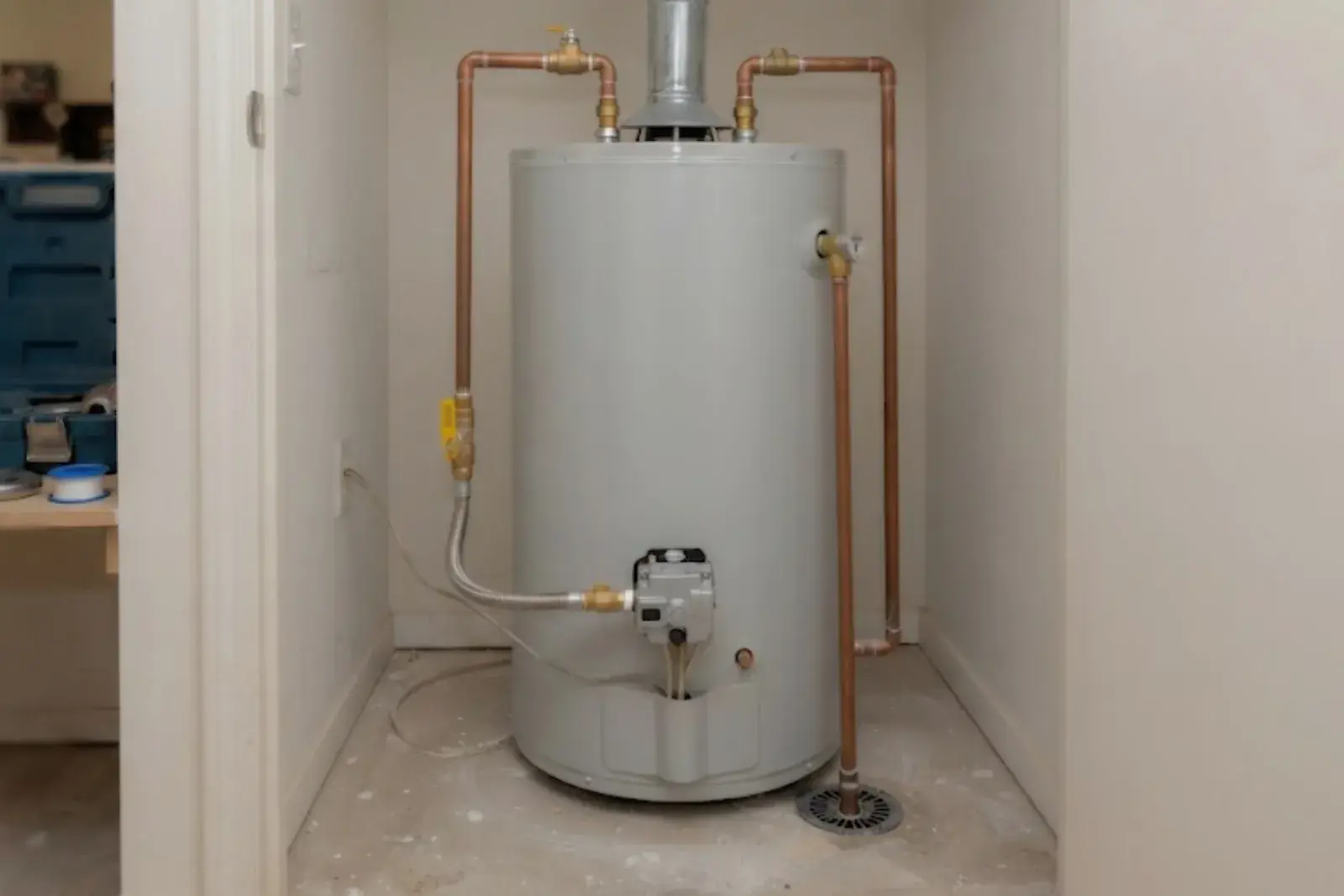
| Water heater as source | Uses a tank unit to feed a heating loop | Only if the maker lists it for space heating, and often needs a heat exchanger to protect drinking water |
| Heat pump or other source | Heats water to a lower temperature | Baseboard emits less at low water temperatures, so rooms may need more footage |
The water heater option deserves caution. Drinking water in a loop that sits for long periods can pick up metals and growth, and heating loops may contain additives. Many manufacturers prohibit certain uses, so a licensed plumber should confirm the unit's documents before anyone plans around it.
Loop design: how the pipe travels
Water loses heat as it flows. In a series loop, every baseboard sits in one long chain, so the last room gets cooler water and heats less. That is why a long series run is often split into two shorter loops.
A parallel layout feeds each loop from supply and return mains. It costs more in pipe, but the rooms heat more evenly and each loop can have its own thermostat. Many houses end up with a hybrid: one loop per zone and a short series run within each zone.
Pipe size also matters. Too small, and water moves too slowly to deliver heat. Too large, and the system costs more and responds slowly. The plumber matches pipe size, pump and loop length to the boiler's output.
Baseboard heat plans?
A dispatcher is on the line 24/7. Nobody here will pressure you into a repair, and the price is agreed before work starts.
How much baseboard goes where
Baseboard is rated in BTUs per hour per foot at a given water temperature. A room needs enough rated length to cover its heat loss on a cold day. Windows are the usual starting place, since fin tube under a window fights the cold air coming off the glass.
Furniture matters too. A sofa pushed against the cover blocks the airflow, and long curtains hanging over the cover do the same. A plan that fits on paper can fail if the layout leaves no clear wall.
Bleeding air: the part everyone meets
Air trapped in a loop makes it gurgle, tick and stay cold in spots. After the system is filled, air is purged zone by zone. Many systems have a purge valve at the mains. High points in the baseboard may have a small bleeder valve.
- 1Turn the boiler off and let the loop coolHot water can scald when a vent is opened.
- 2Set the room thermostat lowThe pump should not run while you work.
- 3Find the bleederIt is a small valve or screw near the top of the baseboard end cap or a high point in the pipe.
- 4Open it slightly with a hose or a rag readyAir hisses out first, then a little water.
- 5Close when water flows steadilyDo not keep it open once water appears.
- 6Check the gaugePressure should return to the value in your boiler manual. Add water through the fill valve only as the manual describes.
Zoning, thermostats and control
Each zone needs its own thermostat and a way to stop flow to other zones. Zone valves are the most common method on a single-pump system, and a separate small pump per zone is the other. The boiler's control board starts when any zone calls for heat.
Zoning is where a design earns or loses comfort. Bedrooms and a bathroom may want their own thermostats, while the hall can share with the living room. More zones add wiring and parts, so each one should have a reason.
What a homeowner can and cannot do
Some of this work is within reach of a careful owner. Removing old covers, painting, cleaning the fins with a vacuum brush and bleeding a bleeder valve as above are all common maintenance tasks. Straightening bent fins with a fin comb is another.
Cutting into pressurized pipe, soldering, connecting a boiler, making gas or vent connections and wiring the controls are different. A solder joint that weeps inside a wall causes damage. Gas and venting errors are dangerous. A licensed plumber should do these.
Permits in Sapulpa and who to ask
The City of Sapulpa's Building Inspections page says plumbing permits are separate from building permits and must be requested by contractors who are currently licensed by the state and registered with the city. The page also says work without required permits can be fined at least double the permit and inspection fees, which matters if you are thinking of doing the piping yourself.
I did not find a city page that addresses homeowner heating loops specifically, so ask City of Sapulpa Building Inspections at 918-248-5910 what your project needs. When you hire out the work, check the plumber's license through the Oklahoma Construction Industries Board at oklahoma.gov/cib.
Questions to ask for a baseboard quote
- Which heat source is proposed, and is it rated for space heating?
- How many feet of baseboard in each room, and how was that chosen?
- How many loops and zones, and where do the thermostats go?
- Where are the purge valves, and who purges the air?
- What happens if the existing boiler is too small?
- Who handles the permit and scheduling?
Towns around Sapulpa
Older homes outside town may already have some kind of heating pipe. In Glenpool, the city has its own contractor registration, so ask the city's permit office before starting work there. If your house is in Kellyville, a plumber will start by checking what fuel is available on the property.
Where the water heater side fits
If the proposed plan uses a tank for any part of heating, a plumber should handle the connections, and our water heater repair page shows how existing units get diagnosed. The wider piping side is covered by the plumbing installation page. Cold rooms in the middle of the night can reach the 24/7 line at (855) 575-2890.
Sources and standards
Baseboard hydronic heat is installed to the boiler maker's instructions and to mechanical and plumbing codes such as the IPC and UPC families, with NFPA 54 governing the gas supply to a gas boiler. For which code edition the city enforces, the building inspections office is the source, and the state board is the source for licenses.
Baseboard heat install questions
Sometimes. The boiler needs spare capacity, the pump must handle the added loop, and the expansion tank must suit the larger water volume. A plumber can check these before any pipe is cut.
Trapped air is the common cause, followed by a closed zone valve, a stuck pump or a long series run. Bleeding air is a safe first try, and if it does not help, call a plumber.
Only if the manufacturer lists the unit for that use, and many plans require a heat exchanger to keep heating water apart from drinking water. Ask a plumber to read the unit's documents first.
The city requires plumbing permits for work done by licensed, registered contractors. Ask City of Sapulpa Building Inspections whether your heating project needs one.
Metal expands as it heats. Mild ticking is normal, and loud banging or gurgling can mean air in the loop or a pipe that is not supported.