
Start with the part you can see. If a bathroom sink in Sapulpa, OK drains slowly but nothing seems clogged, the cause is almost always the pop-up stopper, a coating of hair and soap film on the pipe wall, a partly blocked trap, or a vent that is not letting air in. A true plug would stop the water. A slow drain means flow is restricted, not blocked, and the restriction is often right under your hands.
Follow the water, not the gurgle
Work from the drain opening down. Each step costs almost nothing, and you stop when the sink runs fast again.
- 1Test the stopper.Lift out or unscrew the pop-up stopper and run water. If it speeds up, the stopper was the problem.
- 2Clean the stopper.Wipe hair and gray slime from the stopper and the drain throat.
- 3Check the trap.Place a bucket under the curved P-trap, unscrew the slip nuts by hand and empty it.
- 4Probe the arm.Use a flexible plastic drain strip in the pipe going into the wall.
- 5Listen.Gurgling or a hollow sound after draining suggests a vent issue.
Cause one: the pop-up stopper
Most bathroom sinks have a pop-up stopper that rises and falls with a lift rod behind the faucet. A pivot rod runs through the drain tailpiece and a clevis strap connects the two. Hair wraps around that pivot and slime coats it.
If the stopper does not lift fully, it also restricts flow. A loose nut on the pivot, a bent rod or a clevis in the wrong hole keeps the plug half closed. A faucet repair visit often includes resetting this linkage, since it hangs off the faucet assembly.
Sink still draining slowly?
A dispatcher is on the line 24/7. Nobody here will pressure you into a repair, and the price is agreed before work starts.
Cause two: hair and soap film
Soap is made to cling, and it combines with minerals and body oils to build a gray film on pipe walls. Hair catches in the film and the opening shrinks over months. Water still goes down, only slower. That is why the problem creeps in and why it feels like nothing is wrong when you look.
A hair strip or small auger clears it. Rinse with hot tap water afterward. Monthly cleaning of the stopper prevents the next buildup.
Cause three: the trap
The P-trap holds a bit of water to block sewer gas. It is also where heavy debris settles, such as toothpaste caps, cotton swabs and bits of soap. A trap that is half full of sludge will let water pass, just slowly.
Lowering the trap is simple with a bucket. Look for a ridge inside the curve and for corrosion at the nuts. Reassemble with the washers seated flat and run water to check for drips. If the pipe looks cracked or the nuts spin without tightening, a plumber can replace the fitting.
Cause four: a partial blockage farther in
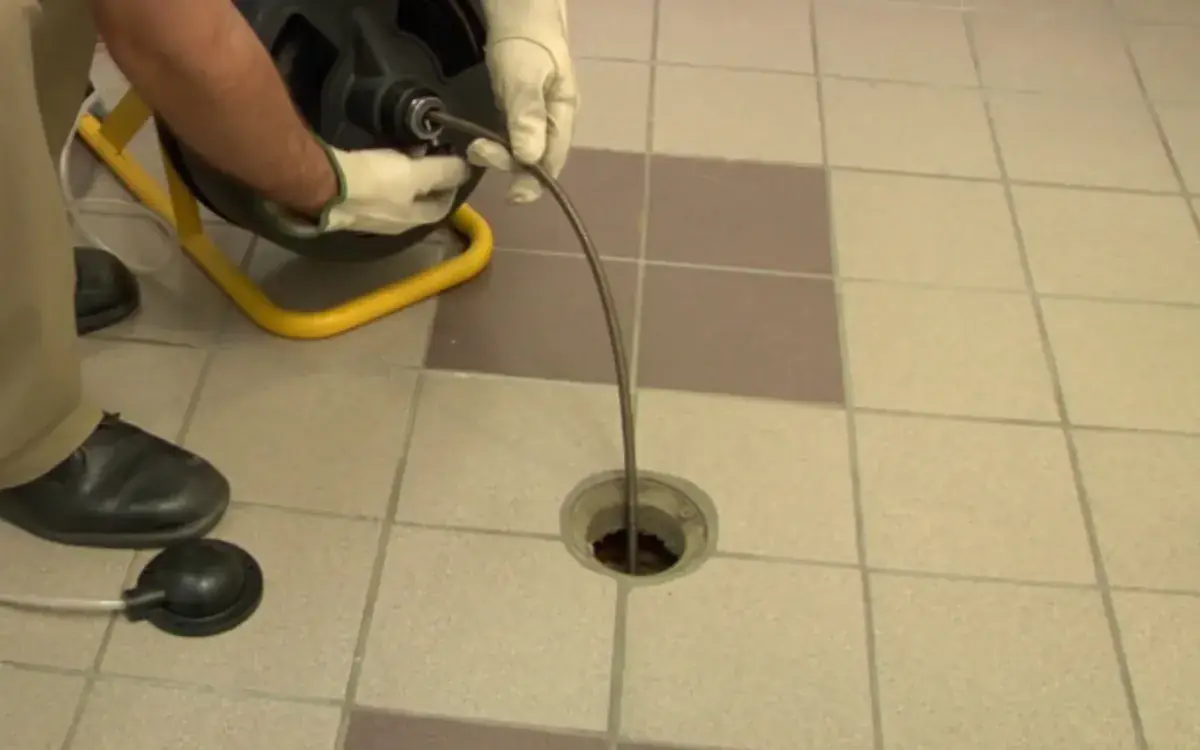
Sometimes the trap is clear and the slowdown lies behind it, in the branch line toward the main drain. A long thin cable or a small cable machine reaches that segment. If the tub and the toilet also run slow, the restriction is shared and you need a plumber with a larger machine, as covered in drain cleaning.
Cause five: vent trouble
Every drain needs air. A vent pipe lets air in behind the water so it can flow, much like a second hole in a juice can. When the vent is blocked by a bird nest, leaves, ice or a collapsed section, the water drains slowly, glugs, and may pull the trap dry.
Signs of a vent problem include gurgling from several fixtures, sewer smell in the bathroom and a slow sink that clears briefly after you run the shower. A vent fix usually involves the roof or the wall, which is plumber territory.
Quick comparison
| Symptom | Likely cause | Who fixes it |
|---|---|---|
| Fast again after cleaning stopper | Stopper or pivot | You |
| Gray slime on tailpiece | Soap film | You |
| Water pools around the trap | Trap sludge | You or a plumber |
| Slow after all of the above | Branch line | Plumber |
| Gurgling, smell, other fixtures slow | Vent or main | Plumber |
Common mistakes
Pouring chemical cleaner into a sink with standing water is the big one, since it sits and burns the fixture and anyone who works on it later. Another is using a metal snake on a thin chrome-plated trap, which scratches it. A third is over-tightening slip nuts, which cracks plastic.
Do not ignore a sink that is slow and smells, because the smell can mean the trap seal is breaking.
Sapulpa licensing and permit notes
The City of Sapulpa Building Inspections page says plumbing permits are separate from building permits. Most plumbing work inside city limits must be done by a contractor licensed by the State and registered with the City, and minor repairs and adjustments are the main exception. Cleaning a stopper or trap is homeowner work. Opening a wall to change a vent is not minor.
Practical takeaway: check with Building Inspections before any vent work, and verify the plumber's license with the Oklahoma Construction Industries Board at oklahoma.gov/cib.
Beyond Sapulpa
Small-town and suburban bathrooms get the same causes. In Mounds, about 10 miles south-southeast of Sapulpa, and in Glenpool, a Tulsa suburb, the same order works: stopper, film, trap, line, vent. The difference is only who you call.
Sources and standards
Trap and vent requirements for a bathroom sink come from the UPC or IPC as adopted locally, which is why a vent fix, unlike cleaning a stopper, is plumber work in most cities. Permit and edition questions belong to the city office, and license questions to the state board.
Frequently asked questions
Yes. Without air behind the water, flow slows and the drain gurgles. If cleaning the stopper and trap changes nothing, the vent is next on the list.
A partial blockage lets the first water through, then backs up as the basin fills. It suggests the restriction is in the trap or farther down the line.
Not yet. Clean the trap and probe the line. If it is still slow, call a plumber to check the branch line and the vent.
An occasional gurgle can be harmless. Repeated gurgling with slow drainage points to air supply or a partial blockage.
Run the check list above, then call the 24/7 line at (855) 575-2890 and a dispatcher will book a licensed plumber to trace it with a camera or cable.