
Baking soda and vinegar will not clear most real drain clogs. The fizz is carbon dioxide gas, water and a mild salt. It does not dissolve hair or push a blockage through a pipe. It can loosen light film and freshen a smelly trap, so it is worth a try on a slow drain in Sapulpa, OK. A standing-water clog usually needs a plunger, a hand tool or a cable machine.
What the fizz actually does
Baking soda is a mild base and vinegar is a mild acid. When they meet, they react and foam. That foam can lift loose residue off pipe walls and carry some of it along. It does not generate heat or pressure strong enough to move a solid plug.
Think of it as a rinse. It helps with soap film, light grease and odors. It does not break down hair, which is the main cause of bathroom sink and tub clogs, and it cannot melt a wad of food or a toy wedged in a trap.
Where it helps and where it does not
| Problem | Baking soda and vinegar | Better first step |
|---|---|---|
| Mild odor from a sink | Helps | Flush with hot tap water after |
| Slow sink with soap film | Maybe | Clean the stopper and trap |
| Hair clog in tub or shower | Little effect | Hair-catching tool or small auger |
| Grease in a kitchen line | Limited | Hot water flush, then a cable |
| Toilet clog | No | Plunger or closet auger |
| Water backing up in several fixtures | No | Call a plumber, it is a main line issue |
If your problem sits in the bottom three rows, skip the kitchen experiment and go to the tool.
Fizz did nothing?
A dispatcher is on the line 24/7. Nobody here will pressure you into a repair, and the price is agreed before work starts.
How to try it safely
If you want to try it, here is a sensible method.
- 1Clear the surface.Remove standing water with a cup and take out the stopper or strainer.
- 2Add baking soda.Pour about half a cup down the drain.
- 3Add vinegar.Follow with about a cup of white vinegar and cover the opening with a plug.
- 4Wait.Give it 15 to 30 minutes.
- 5Flush.Run hot tap water for a minute. Boiling water is not a good idea on PVC or on old porcelain.
If the water still pools after one round, stop. Repeating five times will not change the result and only delays the real fix.
Safer alternatives that work better
A plunger is the first tool for sinks and tubs, since it pushes and pulls the clog loose. Use a flat-bottom cup plunger for sinks and a flanged plunger for toilets. Seal the overflow opening with a wet rag when plunging a bathroom sink.
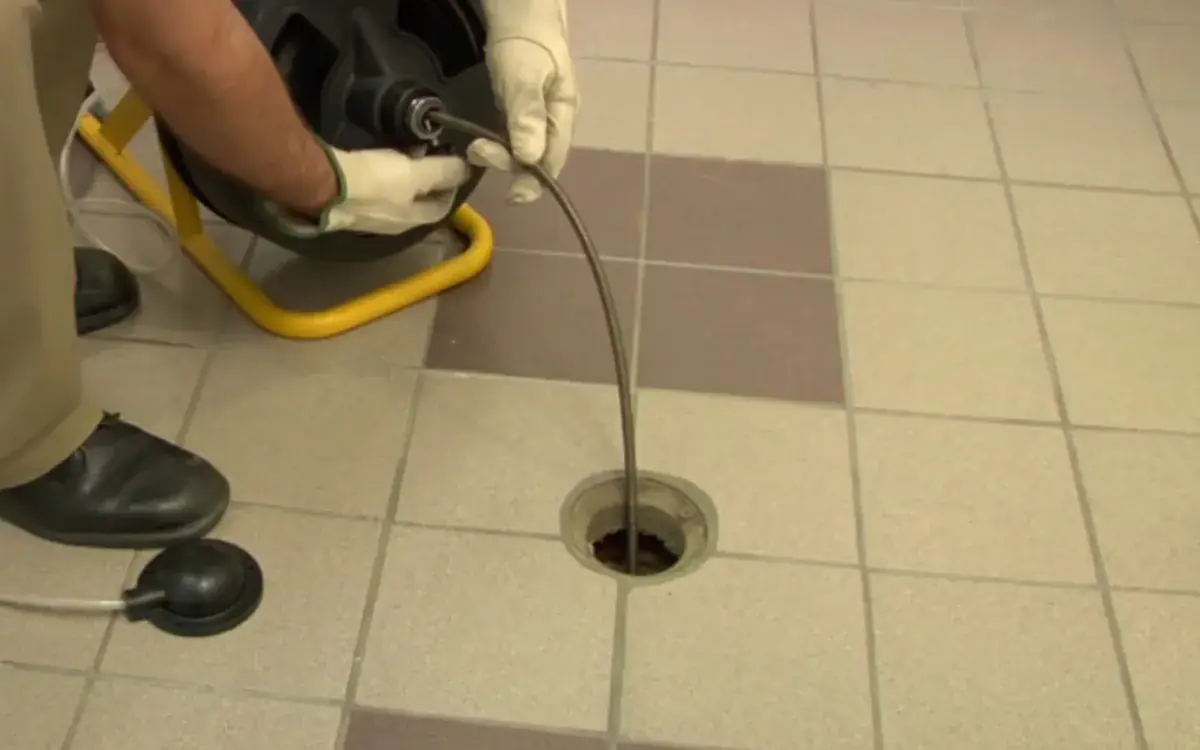
Next, clean the trap. Place a bucket under the P-trap, loosen the slip nuts by hand and clear the gunk. A thin plastic drain strip pulls hair out of tub and sink drains. If neither works, a hand auger reaches a few feet past the trap. Beyond that, a cable machine is the professional step, and drain cleaning covers how it is done.
Enzyme and bacterial cleaners
These are gentler than caustic products. They digest organic matter slowly, so they suit a monthly maintenance habit rather than an emergency. Read the label, since they do nothing for a solid plug.
Never mix these
This is the most important part of the article. Do not combine drain cleaners with each other or with household products.
- Never mix bleach with ammonia or with acid cleaners. The result can be toxic gas
- Never pour vinegar down a drain after a chemical drain opener, or the other way around
- Avoid mixing different brands of drain products
- Do not use a plunger on a drain that still holds caustic cleaner, since splashes burn skin and eyes
- Keep children and pets out of the room
- Ventilate the space
If a chemical cleaner is already sitting in the pipe, tell the plumber before they start, because it can splash during work. The plumber will wear gloves and eye protection.
When it is time to call someone
Call if more than one fixture is slow, if the toilet gurgles when you run the sink, or if water shows up in a tub or floor drain. Those signs point to a shared line, and no home remedy reaches it. Cable machines clear most blockages, and where grease or roots keep coming back, hydro-jetting uses pressurized water to scour the pipe wall instead of poking a hole through the clog.
Do not wait if sewage is rising. Stop using water and call the 24/7 line.
Sapulpa water and sewer notes
The City of Sapulpa Water Treatment Plant supplies drinking water drawn from surface water in Sahoma Lake and Skiatook Lake, according to the city's Consumer Confidence Report for 2025. The report does not give a current hardness figure, and the only figure the city has published is from an older report, so test your own tap if you want to know how much mineral scale your drains see.
The City of Sapulpa Public Works page states that the Utility Maintenance Department maintains city water and sewer lines. The pages reviewed do not say where city responsibility ends and the homeowner's begins. Practical takeaway: if a clog affects every drain and the yard cleanout is full, call a plumber first to confirm where the blockage sits, then ask the city about its side.
Nearby towns, same advice
Home remedies work the same in Kellyville, about 8 miles southwest of Sapulpa, where sewer is billed by the Town. They also behave the same in Mounds, where the Mounds Public Works Authority runs a lagoon-based sewer. Wherever you live, hair and grease are the culprits and a tool beats a recipe.
Sources and standards
The advice here is general drain-care guidance, and the code references are to the UPC and IPC, which cover traps, vents and drain slope, so a vent problem is treated as a code-level repair and not a kitchen-cabinet fix. Permit and edition questions belong to the city office, and license questions to the state board.
Frequently asked questions
In normal amounts they are gentle on PVC, copper and cast iron. The risk is hot or boiling water, which can soften PVC joints, not the mixture itself.
Fifteen to thirty minutes is typical. Longer does not help, because the reaction ends within minutes.
No. Mixing products is risky and the leftover liquid can splash on you or the plumber. If baking soda fails, switch to a plunger or call.
Sometimes it reduces smell and light grease film. A real grease clog often needs a cable or a jet.
They can be hard on fittings and unfriendly to septic systems. Ask a plumber before using one, especially in an older home.
If the fizz did not help, call the 24/7 line at (855) 575-2890 and a dispatcher will book a licensed plumber.